You Won’t Believe What I Discovered in Cusco
Cusco isn’t just a stop on the way to Machu Picchu—it’s a living museum of Andean culture. From the moment I arrived, I was struck by how ancient traditions blend seamlessly with daily life. The streets hum with Quechua conversations, colorful textiles line the markets, and every stone in the plaza holds centuries of stories. This is not performative heritage; it’s real, raw, and deeply rooted. If you're looking for more than check-in photos, Cusco will change the way you think about travel.
Arrival in Cusco: First Impressions That Stick
Descending into Cusco, one feels the altitude before anything else—a subtle pressure behind the eyes, a reminder that this city sits more than 11,000 feet above sea level. The air is crisp, thin, and carries the faint scent of eucalyptus from trees swaying in the highland breeze. As the taxi winds through narrow cobblestone streets, the first sight of colonial architecture emerges, but look closely: beneath arched balconies and painted churches lie perfectly fitted Inca stonework, some blocks weighing several tons, carved and joined without mortar. These are not reconstructions; they are the original foundations upon which Spanish buildings were erected, a physical testament to layers of history compressed into one urban landscape.
The city’s layout follows the shape of a puma—an ancient Inca symbol—its head at Sacsayhuamán, the body stretching down into the center. Walking through the Plaza de Armas, visitors encounter locals moving with quiet dignity, many dressed in traditional clothing, pausing to greet neighbors or light small offerings near stone walls. There is no rush to perform for tourists. Instead, life unfolds naturally: a grandmother selling woven bracelets, a street musician playing a panpipe melody passed down through generations, children laughing as they chase each other between fountains. This rhythm is not curated; it is inherited.
What sets Cusco apart from other historic destinations is the continuity of cultural presence. Unlike cities where heritage is preserved behind velvet ropes, here, history breathes. The stones are walked upon, not just admired. Ceremonies still take place at ancient sites, often before sunrise, led by community elders. Visitors may not always see these moments, but their energy lingers in the silence of dawn. To arrive in Cusco is to step into a place where time does not move forward in a straight line—it spirals, carrying the past into every present gesture.
The Heartbeat of Andean Culture: Daily Life in the Streets
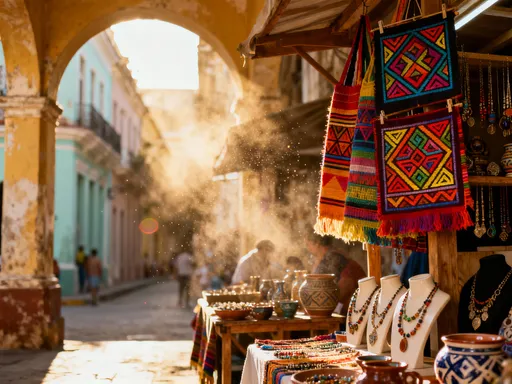
Nowhere is this living culture more vivid than in the San Pedro Market, a sprawling labyrinth of stalls tucked just blocks from the main square. From early morning until late afternoon, the market pulses with activity. Vendors in wide polleras—colorful, layered skirts—sit beside baskets brimming with coca leaves, purple corn, and fresh herbs used in traditional healing. The scent of roasting guinea pig, a delicacy known locally as cuy, mingles with the sharp tang of ají peppers and the sweetness of ripe mangoes.
Quechua, the language of the Inca Empire, echoes throughout the aisles. It is not a relic taught in classrooms but the living tongue of grandmothers bargaining for potatoes, of mothers calling to their children, of artisans explaining the meaning behind a textile’s pattern. Spanish is widely spoken, especially in tourist-facing businesses, but Quechua remains the heart language of the home and the field. To hear it is to understand that culture is not only seen in dress or dance but heard in the cadence of everyday speech.
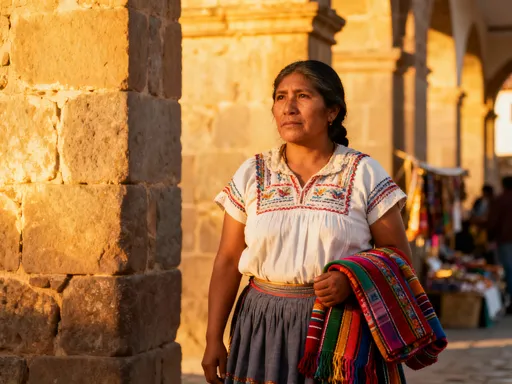
One woman, seated on a low stool with a handwoven shawl draped over her shoulders, arranges bundles of dried herbs. When asked what they are for, she smiles and explains they are used in limpias—spiritual cleansings performed with smoke and prayer. She does not offer to sell one to every passerby; only those who ask receive an explanation. This quiet selectivity reflects a deeper truth: these traditions are not for display but for practice. They are part of a worldview that sees the natural and spiritual as intertwined, where food, clothing, and ritual all carry meaning.
Children weave through the crowd, carrying bags of groceries for their families. Elders are greeted with a gentle touch on the arm or a soft bow of the head—signs of deep respect embedded in social etiquette. Even the way people eat tells a story: meals often begin with a small offering to Pachamama, Mother Earth, a few grains of corn or drops of chicha (a fermented corn drink) sprinkled on the ground. These gestures are not theatrical; they are automatic, like breathing. In Cusco, culture is not something one puts on—it is something one lives.
Sacred Spaces: Where Spirituality Meets Stone
At the heart of Cusco stands Qorikancha, once the most sacred temple in the Inca Empire, dedicated to Inti, the Sun God. Historical records suggest its walls were once covered in gold, shimmering so brightly they could be seen from miles away. Today, a Dominican church rises atop the temple’s original foundation, its bell tower casting a shadow over the curved Inca stonework below. This fusion is not a contradiction but a complex dialogue between belief systems—one built upon the other, yet both still present.
Visitors enter through the church courtyard, where sunlight filters through archways onto stones so precisely cut that a knife blade cannot fit between them. Guides explain how the Inca engineered these walls to withstand earthquakes, a necessity in this seismically active region. But beyond engineering, there is intention: the curvature of the walls follows the movement of the sun, and certain niches align with solstice events. The space was designed not just for worship but as a living calendar, a tool for understanding time and nature.
On quiet mornings, locals still come to leave small offerings—bundles of coca leaves, woven cloth, or dried flowers—placed carefully at the base of the ancient walls. These acts are not tourist performances but personal devotions, often made in silence. Anthropologists refer to ceques, a network of sacred lines that radiated from Cusco to important shrines across the empire. Though invisible today, these spiritual pathways still influence how some Andeans navigate the city, choosing routes based on energetic significance rather than convenience.
For the visitor, Qorikancha offers more than architectural wonder; it invites reflection on how belief endures. The Spanish sought to replace Inca religion, yet instead of erasing it, they built over it—unwittingly preserving its foundations. Today, both faiths coexist, not in conflict but in layered harmony. To stand in this place is to feel the weight of centuries, not as a burden, but as a continuity. Spirituality here is not confined to temples; it flows through the streets, the soil, the very air.
Festivals That Define a People: Experiencing Inti Raymi
Every June 24, Cusco transforms for Inti Raymi, the Festival of the Sun, a celebration rooted in the winter solstice and the Inca reverence for light, fertility, and renewal. Though banned during colonial times, it was revived in the 1940s as a symbol of cultural pride and now draws tens of thousands of visitors each year. The main event takes place at Sacsayhuamán, the fortress-like complex overlooking the city, where hundreds of performers in elaborate costumes reenact the ceremony once led by the Sapa Inca.
At dawn, drummers beat rhythms across the hills. Dancers in feathered headdresses, golden tunics, and sandals made of recycled tires move in synchronized formations. The central figure, portraying the Inca emperor, delivers a speech in Quechua, calling upon the sun to return strength to the earth. Spectators fill the terraces, many filming with phones, but the energy is not solely for show. Behind the scenes, families gather in homes and community centers to hold private rituals, offering food, music, and prayers to ensure good harvests and family well-being.
What makes Inti Raymi powerful is its duality: it is both a public spectacle and a private devotion. For many participants, especially those from nearby villages, the festival is not about tourism but about reaffirming identity. Children learn their roles from elders, memorizing chants and dances that have been passed down orally for generations. Schools in the region incorporate Inti Raymi into their curriculum, teaching students about Inca cosmology and agricultural cycles.
The festival also highlights the resilience of Andean culture. After centuries of suppression, its revival is not nostalgia—it is resistance. It says: we are still here. We remember. We celebrate on our own terms. For the traveler, witnessing Inti Raymi is not just about seeing color and movement; it is about understanding the depth of cultural memory and the courage it takes to keep it alive. Those who come only for photos may miss the quiet tears of an elder watching her grandson perform a role once held by his ancestors.
Crafting Identity: Textiles, Pottery, and Oral Traditions
A short drive from Cusco lies Chinchero, a village perched on a mountainside where weaving is not a craft but a covenant. Women gather in communal workshops, seated at wooden looms, their hands moving with practiced ease. The wool comes from local alpacas, spun by hand, dyed using plants, insects, and minerals found in the surrounding valleys. Cochineal, harvested from cacti-dwelling insects, produces deep reds; indigo yields blues; eucalyptus bark gives soft yellows. Each color has meaning, each pattern a story.
One artisan, Rosa, explains that her mother taught her to weave before she could read. “The manta is not just a shawl,” she says. “It is a map. This zigzag? It is the path of the condor. These diamonds? They are fields seen from above, our way of farming.” Her designs encode ancestral knowledge—geography, cosmology, family history—all preserved in thread. When she sells a piece, she often includes a small card with its name and meaning, ensuring the buyer understands it is not merely decorative.
These cooperatives are more than workshops; they are acts of cultural preservation. Global demand for cheap textiles has flooded markets with machine-made imitations, but Chinchero weavers refuse to compromise. They reject synthetic dyes, mass production, and exploitative middlemen. Instead, they sell directly to visitors or through fair-trade networks, ensuring profits stay in the community. Some women have used their earnings to send children to university, creating a cycle of empowerment rooted in tradition.
But weaving is not the only art form thriving here. In nearby villages, potters shape clay using techniques unchanged for centuries, crafting vessels used in ceremonies and daily life. And in the evenings, elders gather children in circles to share oral stories—tales of Tunupa, the mountain spirit who taught weaving, or of Pachamama’s anger when humans take too much from the earth. These moments are unrecorded, unshared on social media, yet they are where culture truly lives: in the voice, the memory, the shared silence after a story ends.
Beyond the Tourist Trail: Village Life in the Sacred Valley
For a deeper understanding of Andean life, a visit to a smaller community like Huilloc or Pisac offers a quieter, more intimate experience. These villages, nestled in the folds of the Sacred Valley, operate on a different rhythm. There are no souvenir stalls lining every street, no guided bus tours blaring announcements. Instead, life revolves around agriculture, family, and reciprocity.
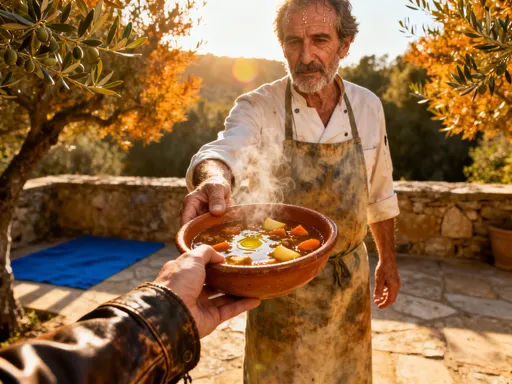
In Huilloc, a farming family may invite guests for lunch—a simple meal of quinoa stew, roasted potatoes, and fresh cheese. As they eat, they explain how they rotate crops using the Inca system of waru waru, raised fields that regulate temperature and moisture. Before planting, they perform a despacho, a ritual offering to Pachamama, placing coca leaves, flowers, and small pieces of food into a bundle that is then burned. It is not a performance for visitors but a necessary act of gratitude and balance.
Community-based tourism initiatives have grown in these areas, allowing families to host travelers in homestays, lead nature walks, or teach traditional cooking. Unlike large tour companies, these programs ensure that income goes directly to those who provide the experience. Travelers learn not by watching but by participating—helping to feed animals, grinding corn, or planting seeds. These moments create connection, not consumption.
Children in these villages often speak both Quechua and Spanish, and many are proud to teach visitors basic phrases. One girl, no older than ten, patiently repeated “Allillanchu” (Hello) and “Sulpayki” (Thank you) until the visitor could say them correctly. Her laughter was not mocking but joyful—a shared moment of exchange. In these villages, hospitality is not a service; it is a value. To be welcomed is to be seen, not as a customer, but as a guest.
Traveling with Respect: How to Engage Without Exploiting
With great cultural richness comes great responsibility. Too often, destinations like Cusco suffer from what some scholars call “curio colonialism”—the reduction of living traditions into quaint souvenirs, stripped of meaning and sold for profit. To avoid this, travelers must approach with humility, curiosity, and a willingness to listen.
Begin with small gestures: learn a few words of Quechua before arriving. Say “Allillanchu” when greeting someone. Ask permission before taking photographs, especially of people in traditional dress. When shopping, buy directly from artisans at cooperatives or markets, not from vendors selling imported imitations. A higher price often reflects fair wages and sustainable practices.
Choose experiences that prioritize local voices. Hire a Quechua-speaking guide from a community-based organization. Stay in a family-run guesthouse rather than an international chain hotel. Join a cooking class led by a local grandmother, not a commercial kitchen with staged demonstrations. These choices may require more planning, but they offer richer, more authentic connections.
Most importantly, resist the urge to treat culture as entertainment. A ceremony is not a show. A textile is not a decoration. A language is not a novelty. Each is part of a living system of belief, identity, and survival. When travelers recognize this, they shift from being observers to participants—temporary members of a community that has thrived for centuries.
Responsible travel is not about restriction; it is about depth. It means slowing down, asking questions, and accepting that some things are not meant to be fully understood by outsiders. It means leaving not just with photos, but with a sense of gratitude and a quiet promise: to remember, to respect, and to return with care.
Cusco teaches that culture isn’t something you see—it’s something you feel, slowly, through presence and patience. It challenges the traveler to move beyond sightseeing and step into relationship. When you leave, you don’t just carry memories; you carry responsibility—to remember, to respect, and to return the gaze with honesty. That’s the real journey.