Where Art Lives in the Hills – Thimphu’s Soul Through Its Districts
Thimphu isn’t your typical capital. Nestled in the Himalayas, it breathes art in its streets, temples, and everyday life. I wandered through its districts and found creativity woven into prayer flags, carved into wooden eaves, and painted on monastery walls. This city doesn’t display art—it lives it. From bustling markets to quiet spiritual corners, each neighborhood tells a story. If you’re seeking culture that feels real, not staged, Thimphu delivers. Here, art is not an object to be observed but a rhythm to be followed, a language spoken through color, motion, and devotion. It is in the way a weaver aligns every thread with intention, how a painter meditates before touching brush to canvas, and how a dancer’s mask becomes more than wood—it becomes a vessel of meaning. This is a capital where tradition and creativity are inseparable, and every district contributes a unique verse to Bhutan’s cultural song.
The Heartbeat of Thimphu: North vs. South Districts
Thimphu’s geography shapes more than its skyline—it shapes its soul. Divided by the Wang Chhu River, the city unfolds in two distinct rhythms: the northern and southern districts, each offering a different expression of Bhutanese life and artistry. The north, where government buildings rise modestly against pine-covered slopes, pulses with modernity. Yet even here, tradition is not lost. Administrative offices are adorned with intricate woodwork, and official signage bears the elegance of Bhutanese calligraphy. This area reflects a contemporary Bhutan—forward-looking, yet deeply respectful of heritage. The architecture, though functional, still follows the national mandate: all buildings must incorporate traditional design elements, from sloping roofs to hand-painted motifs around windows and doors.
South of the river, the tempo shifts. The southern districts feel older, quieter, and more introspective. This is where the city’s cultural heart beats strongest. Temples dot the hillsides, and the air carries the scent of incense from nearby monasteries. Art here is not curated—it is lived. Homes display carved wooden brackets, prayer wheels spin in courtyards, and thangka paintings hang behind simple wooden frames. The contrast between north and south is not one of opposition but of balance. The north represents Bhutan’s engagement with the modern world, while the south safeguards the timeless practices that define its identity. Understanding this duality is key to appreciating how art functions in Thimphu—not as a luxury, but as a thread woven through daily existence.
Why does this division matter for art? Because it illustrates how creativity adapts without losing its essence. In the north, you see art serving public life—murals in community centers, traditional patterns on government uniforms, and festivals organized to strengthen national identity. In the south, art is more intimate, often tied to spiritual practice and family lineage. A woodcarver in the south may spend months on a single altar, guided by religious texts and ancestral knowledge. In the north, a young artist might reinterpret those same motifs in a public mural, blending sacred symbols with contemporary themes. Both are valid, both are valued, and both contribute to a living artistic tradition that is as dynamic as it is rooted.
Changlimithang: Where Tradition Performs
At the eastern edge of Thimphu lies Changlimithang, a district that pulses with cultural energy. Home to the national stadium and the Folk Heritage Museum, it is a space where art moves, breathes, and commands attention. Unlike static exhibitions, the art here is performative—meant to be seen in motion, heard in rhythm, and felt in the body. The stadium, though used for sports, transforms during festivals into a grand stage for mask dances, or cham. These performances are not entertainment in the Western sense; they are sacred acts, meant to convey moral lessons, honor deities, and purify the community.
Attending a rehearsal at Changlimithang is to witness discipline and devotion. Dancers, many of them monks or trained laymen, move with precision, their heavy brocade costumes rustling with every step. The masks—carved from wood and painted in bold, symbolic colors—depict deities, demons, and ancestral figures. Each movement is choreographed to represent a spiritual narrative, often drawn from Buddhist teachings. The music, driven by long horns, cymbals, and drums, creates a hypnotic rhythm that seems to rise from the earth itself. There is no spotlight, no amplification—just the raw power of human expression amplified by centuries of tradition.
What makes Changlimithang remarkable is how public space becomes a vessel for cultural transmission. During the annual Thimphu Tsechu, thousands gather on the grassy slopes surrounding the stadium, sitting cross-legged with picnic baskets, eyes fixed on the dancers below. Children watch intently, absorbing stories they will one day reenact. The performance is not separated from the audience by ropes or tickets; it is shared, communal, alive. Even outside festival season, the Folk Heritage Museum preserves this legacy, displaying traditional costumes, instruments, and household artifacts. It serves as both archive and classroom, reminding visitors that Bhutanese art is not confined to galleries—it is carried in the body, passed from hand to hand, generation to generation.
Centrum and Norzin Lam: Street Art with a Spiritual Pulse
Walk down Norzin Lam, one of Thimphu’s main thoroughfares, and you’ll find that the city’s artistic spirit spills boldly onto its streets. This is not graffiti in the rebellious sense, but a form of sanctioned, spiritually grounded street art that transforms walls into meditative canvases. Murals depict mandalas, lotus blossoms, and protective deities, their vibrant blues, reds, and golds glowing against whitewashed stone. Some are commissioned by the government as part of urban beautification; others emerge from grassroots efforts by local artists who see their work as both devotion and cultural preservation.
The blend of old and new is especially visible here. A mural of Guru Rinpoche might be framed by geometric patterns inspired by modern design, or a traditional dzong (fortress) could be rendered in a stylized, almost abstract form. These interpretations do not disrespect tradition—they dialogue with it. Artists trained in classical thangka painting apply their skills to public walls, adapting sacred imagery for open-air viewing. The result is a cityscape that feels both ancient and alive, where every corner offers a moment of visual contemplation.
But art on Norzin Lam isn’t limited to murals. Shopfronts are adorned with hand-painted signs in Bhutanese script, each character carefully formed with brush and ink. Even utility boxes are transformed—wrapped in miniature frescoes of dragons or snow lions. In Centrum, the commercial heart of the city, this aesthetic extends indoors. Cafés display local paintings, and boutiques frame textiles like museum pieces. The district proves that commerce and culture can coexist, as long as the latter is not reduced to souvenir status. Here, art is not an add-on—it is the atmosphere. It guides how spaces are designed, how products are presented, and how people move through the city with a quiet sense of reverence.
Motithang: Quiet Aesthetics and Hidden Studios
Perched on a gentle slope west of the city center, Motithang offers a different kind of artistic experience—one defined by stillness and intention. Known for its residential calm and proximity to the famous Takin Preserve, this district also harbors some of Thimphu’s most dedicated creative spaces. Away from the bustle, family-run studios practice crafts that demand patience: ceramic making, hand weaving, and thangka painting. These are not tourist attractions but working spaces where tradition is preserved through daily practice.
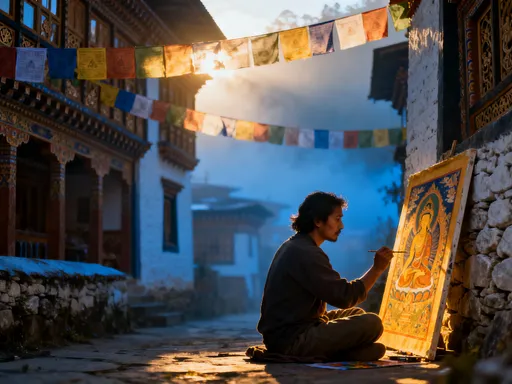
One such studio belongs to a third-generation thangka painter who welcomes visitors by appointment. Inside a modest home, brushes as fine as a single hair rest beside bowls of natural pigments—crushed minerals, ground malachite, powdered gold. The artist begins each day with meditation, aligning mind and spirit before touching canvas. A single painting can take months, even years, to complete, each stroke governed by religious texts that dictate proportions, colors, and iconography. To watch the process is to understand that in Bhutan, art is not self-expression in the individualistic sense—it is service. It is an act of devotion meant to inspire mindfulness in the viewer.
Motithang’s quietude is not emptiness—it is fertile ground for concentration. The absence of noise, the rhythm of daily rituals, and the presence of nearby temples create an environment where deep focus is possible. Weavers in the district use backstrap looms passed down through generations, their patterns echoing those found in ancient monasteries. Ceramic artists fire their wares in small kilns, crafting cups and bowls that echo the simplicity of monastic life. These craftspeople are not seeking fame; they are ensuring that skills do not vanish in the face of mass production. In Motithang, art thrives not because it is loud, but because it is rooted in purpose and protected by silence.
Kawajangsa: The Maker’s Market and Creative Economy
On weekends, Kawajangsa transforms into a vibrant open-air gallery. The weekend market, officially known as the Centenary Farmers’ Market, is a feast for the senses and a testament to Bhutan’s living craft economy. Rows of stalls overflow with handwoven textiles, intricately carved masks, silver jewelry, and painted prayer wheels. This is not mass-produced merchandise but the work of individual artisans, many of whom travel from rural villages to sell their creations. Each piece carries the mark of its maker—imperfections that speak of human hands, patterns that tell of regional identity.
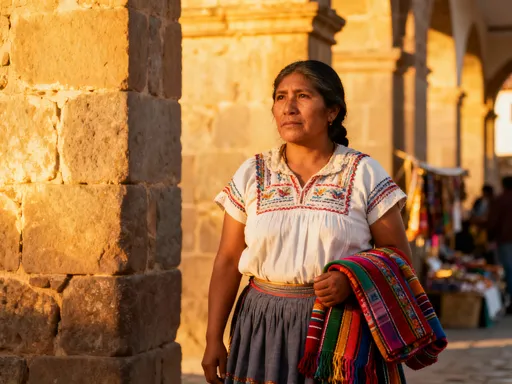
Meet Pema, a woman in her fifties who has been embroidering since childhood. Her stall is modest, but her work is exquisite—scarves and kiras (traditional dresses) adorned with floral motifs stitched in silk thread. She learned from her mother, who learned from hers, and now teaches her daughter. “This is not just stitching,” she says. “It is memory.” Her designs follow the traditions of eastern Bhutan, where nature inspires every pattern—rhododendrons, clouds, mountain streams. She sells enough to support her family, but more importantly, she keeps a legacy alive. Tourism has given her a wider audience, but she resists simplifying her work for faster sales. “If I change the patterns, it is no longer ours,” she insists.
Kawajangsa exemplifies how art and livelihood intertwine in Thimphu. The market is more than a shopping destination—it is a social hub, a cultural exchange, and an economic lifeline for rural artisans. The government supports this ecosystem through fair pricing policies and infrastructure, ensuring that artists are not exploited. Unlike tourist markets in other countries, where authenticity is diluted for mass appeal, Kawajangsa maintains integrity. Items are priced fairly, craftsmanship is honored, and buyers are educated about the significance of what they purchase. Here, art is not a commodity to be consumed but a heritage to be respected. The market proves that economic sustainability and cultural preservation can go hand in hand when guided by respect and intention.
Institutional Art: From National Textile Museum to School of Traditional Arts
While much of Thimphu’s art thrives in informal spaces, formal institutions play a vital role in its continuity. The National Textile Museum, nestled near the riverbank, is a quiet sanctuary dedicated to Bhutan’s most revered craft. Inside, visitors walk through a chronological and regional journey of weaving, from the bold striped fabrics of the west to the intricate brocades of the east. Each exhibit explains not just the technique but the cultural context—how certain patterns are worn only by royalty, how others are reserved for religious ceremonies. Interactive displays allow visitors to try simple weaving motions, creating a tactile connection to the craft.
Equally important is the School of Traditional Arts, where young Bhutanese train in the disciplines that define their heritage. Students here spend eight years mastering painting, sculpture, woodcarving, and embroidery. Their curriculum is rigorous, blending spiritual study with technical precision. A first-year student might spend weeks learning to draw a single deity’s face in perfect proportion before advancing to full compositions. The school does not encourage innovation for its own sake; instead, it emphasizes fidelity to tradition. Yet this is not stagnation—within the framework of ancient rules, students develop deep personal skill and understanding.
These institutions do not exist to freeze culture in time. Rather, they ensure that when change comes, it is informed by knowledge. Graduates go on to work in monasteries, government projects, or their own studios, carrying forward techniques that might otherwise fade. The school also collaborates with international researchers and museums, sharing Bhutanese art with the world on its own terms. In an era of digital reproduction and fast fashion, these spaces stand as guardians of authenticity. They remind us that art, to be meaningful, must be rooted in discipline, knowledge, and respect for lineage.
Art Beyond Galleries: How Thimphu Redefines Urban Creativity
Thimphu challenges the Western notion that art belongs in museums, galleries, or designated cultural districts. Here, art is not something you go to see—it is something you live within. It is in the way a door is carved, how a staircase is painted, how a festival brings an entire city to a standstill. There are no velvet ropes, no hushed tones—just people moving through a world they have shaped with beauty and meaning. This is not art as spectacle, but art as necessity. It serves spiritual, social, and emotional functions, binding community and expressing identity.
Compare this to cities where art is often isolated—hung in climate-controlled rooms, priced beyond reach, or reduced to Instagram backdrops. Thimphu offers an alternative: a model where creativity is woven into the fabric of daily life. A shopkeeper paints her own sign. A monk carves a new prayer wheel. A child learns a dance that has been performed for centuries. These acts are not extraordinary—they are ordinary. And that is their power. When art is normalized, it becomes sustainable. It does not depend on grants or curators; it depends on people who see creation as part of being human.
This does not mean Thimphu resists change. Modern materials are used, new designs emerge, and young artists experiment. But innovation here is not a break from the past—it is a continuation. A digital artist might animate a traditional mask dance, but the story remains sacred. A fashion designer might use handwoven fabric in a contemporary dress, but the weave follows ancestral patterns. The city teaches a profound lesson: that true creativity is not about novelty, but about depth. It flourishes not in isolation, but in connection—to history, to community, to belief.
Walking through Thimphu is like stepping into a painting that is still being made. The brushstrokes are not hidden; they are visible in every gesture, every building, every face. This is a capital that does not chase trends but holds fast to values. Its art is not for sale in the deepest sense—it cannot be bought, only experienced. It is tradition made visible, identity made tangible, spirit made real. In a world where so much feels temporary, Thimphu stands as a quiet testament to what endures. Here, art is not a luxury. It is the air the city breathes, the rhythm of its heart, the soul painted openly, proudly, for all to see.