Beyond the Beaches: Where the Wild Heart of the Canary Islands Beats
Have you ever stood somewhere so untouched it felt like the world’s best-kept secret? That’s the Canary Islands beyond the resorts—hidden within are protected landscapes so raw and breathtaking, they redefine paradise. From misty laurel forests to volcanic calderas draped in golden light, these natural sanctuaries aren’t just beautiful—they’re alive with story and soul. I went searching for the islands’ wild side, and what I found was pure magic.
The Untamed Soul of the Canary Islands
The Canary Islands are often celebrated for their sun-kissed coastlines, lively beachfront promenades, and year-round warmth that draws millions of visitors annually. Yet beyond the postcard-perfect shores lies a quieter, more profound truth—these volcanic islands are home to some of Europe’s most extraordinary protected natural spaces. These areas, carefully preserved through national park designations and biosphere reserve status, represent not only ecological treasures but cultural anchors that connect the islands to their ancient past. While tourism thrives in coastal hubs, it is in the highlands, forests, and lava fields where the true spirit of the Canaries reveals itself.
Protected areas cover nearly half of the archipelago’s total landmass, a testament to Spain’s commitment to conservation and sustainable tourism. These zones safeguard rare plant species found nowhere else on Earth, protect vital water sources, and maintain habitats for endemic birds such as the blue chaffinch and the laurel pigeon. More than environmental strongholds, they are living classrooms where visitors can learn about geological time, island evolution, and the delicate balance between human presence and natural resilience. For the mindful traveler, stepping into these landscapes offers an experience far deeper than relaxation—it becomes a journey of connection and reverence.
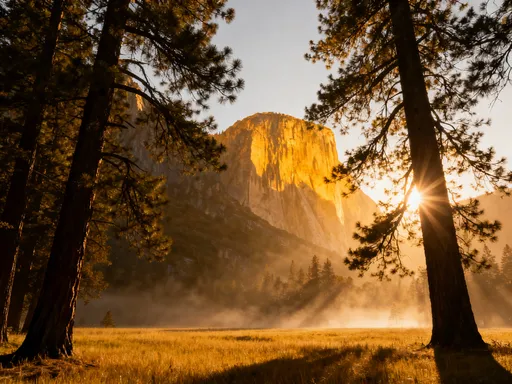
Choosing to explore these wild spaces means embracing a different rhythm of travel. It invites slowness: the time to listen to wind whispering through pine needles, to watch clouds drift across volcanic craters, or to pause at a mountain overlook as sunlight transforms the terrain below. This is not passive sightseeing but active engagement with nature’s grandeur. And while resorts offer comfort and convenience, it is in the silence of a misty forest or the vastness of a lunar-like plain that one feels most alive. The Canary Islands’ greatest luxury is not five-star service—it is the gift of unspoiled wilderness, patiently waiting just beyond the well-trodden path.
Teide National Park: Walking on Another Planet
Rising 3,718 meters above sea level, Mount Teide dominates the skyline of Tenerife like a sentinel from another world. As Spain’s highest peak and the third-tallest volcanic structure on Earth when measured from its base on the ocean floor, Teide is more than a mountain—it is a geological marvel and the centerpiece of Teide National Park, a UNESCO World Heritage Site since 2007. The landscape here defies expectation: jagged lava flows stretch in all directions, sculpted by centuries of wind and weather into surreal formations. Craters pockmark the earth, fumaroles release faint wisps of steam, and the soil ranges in color from deep black to rust red and sulfur yellow, creating a palette that feels almost alien.
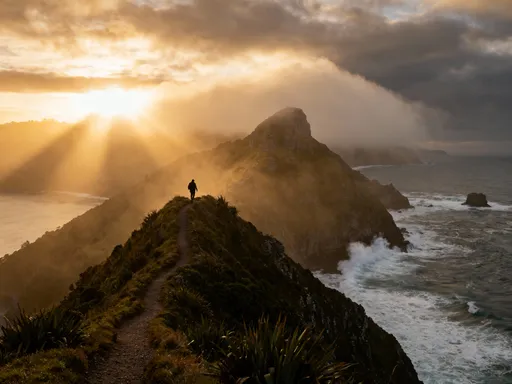
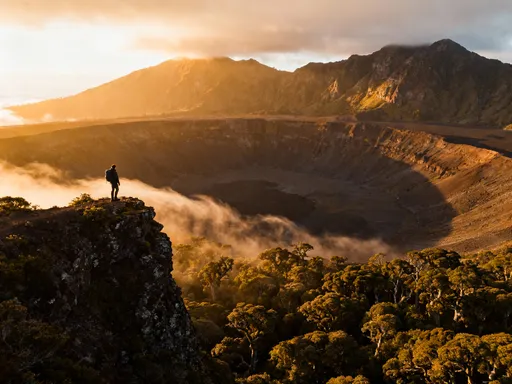
One of the most transcendent experiences in the Canaries is witnessing sunrise from just below the summit. As the first rays strike the peak, the sky shifts from indigo to gold, casting long shadows across the caldera and illuminating the Teide-Pico Viejo stratovolcano complex in dramatic relief. The air is crisp and thin, and the silence is profound—a reminder of the mountain’s sacred status among the Guanche, the islands’ original inhabitants. Visitors who ascend via the cable car are rewarded with panoramic views stretching across the Atlantic to neighboring islands, while those who obtain a permit to hike the final stretch to the summit gain access to one of the most coveted vantage points in the archipelago.
Despite its rugged appearance, life thrives in unexpected ways. The Teide bugloss, a striking red flower with a candelabra-like bloom, clings to rocky crevices and blooms in late summer, adapted to intense sunlight and minimal moisture. Other endemic species, such as the violet cat’s claw and the Teide wallflower, have evolved unique survival strategies in this high-altitude desert. Conservation efforts ensure these fragile ecosystems remain undisturbed, with strict rules against straying from marked trails and prohibitions on collecting plants or rocks.
Equally remarkable is the park’s status as one of the best stargazing locations in the world. Designated a Starlight Reserve, its high elevation, clean air, and low light pollution create ideal conditions for observing the Milky Way, meteor showers, and distant galaxies. Nighttime guided tours allow visitors to peer through telescopes while learning about Canarian sky legends and modern astronomy. Whether bathed in dawn light or starlight, Teide National Park offers an experience that transcends ordinary tourism—it is a pilgrimage to the heart of the Earth’s creative forces.
Garajonay National Park: Where Clouds Hug Ancient Forests
On the island of La Gomera, a veil of mist often shrouds the central highlands, cloaking Garajonay National Park in an atmosphere of timeless mystery. This 40-square-kilometer expanse of laurel forest is a survivor from the Miocene epoch, a subtropical woodland that once covered much of southern Europe but now exists only in fragments across Macaronesia. Stepping into Garajonay is like entering a prehistoric dream: giant laurel, holly, and viñátigo trees form a dense canopy overhead, their trunks draped in mosses, lichens, and ferns nourished by the constant moisture of the trade wind clouds. The air is cool and damp, carrying the earthy scent of decaying leaves and the soft drip of condensation from leaves above.
The park’s unique ecosystem, known locally as “fayal-brezal,” depends on the phenomenon of horizontal precipitation—where clouds condense directly onto vegetation, providing up to 80% of the area’s water input. This “cloud forest” functions as a natural sponge, capturing moisture and feeding streams that sustain life across the island. Recognized as a UNESCO World Heritage Site in 1986, Garajonay plays a crucial role in La Gomera’s hydrology and biodiversity. It is home to over 400 endemic plant species and provides shelter for rare birds such as the Bolle’s pigeon and the La Gomera goldcrest, both of which are found nowhere else on Earth.
Well-maintained trails wind through the forest, allowing visitors to immerse themselves in its quiet majesty. The most popular route, the Los Órganos trail, leads through a dramatic ravine where basalt columns rise like organ pipes, formed by ancient volcanic activity. Another favorite, the El Cedro trail, connects the park to a historic timber village, offering insights into the island’s forestry heritage. Along the way, interpretive signs explain the ecological significance of what might otherwise seem like a simple woodland walk. Rangers and local guides often lead educational tours, emphasizing the importance of preserving this fragile environment from invasive species, climate change, and unregulated foot traffic.
For many who visit, Garajonay evokes a deep emotional response. The stillness, the green hush, the sense of walking through a living museum—all contribute to a feeling of reverence. It is not a place for loud voices or hurried steps. Instead, it invites contemplation, a slowing down of pace and thought. In a world increasingly dominated by speed and noise, Garajonay stands as a sanctuary of serenity, a reminder that some of the most powerful experiences come not from doing, but from simply being present in nature’s embrace.
Maspalomas Dunes: Desert Dreams by the Sea
On the southern tip of Gran Canaria, where the Atlantic Ocean meets an expanse of undulating golden sands, lies one of the Canaries’ most surreal landscapes—the Maspalomas Dunes. Covering approximately 400 hectares, this protected natural monument resembles a miniature Sahara transplanted to the edge of Europe. The dunes, shaped by persistent trade winds, shift and flow like frozen waves, their crests glowing amber at sunrise and deep orange at sunset. Just beyond, the turquoise waters of the ocean crash against the shore, creating a striking contrast between arid desert and vibrant sea.
Despite its seemingly barren appearance, the dune system supports a surprising variety of life. Hardy plants such as sea daffodils and saltbush have adapted to the dry, saline conditions, anchoring the sand and preventing erosion. These plants, along with underground aquifers, sustain a fragile ecological balance that has evolved over millennia. The area is also a vital stopover for migratory birds, including the slender-billed gull and the Kentish plover, some of which nest in the dune margins during spring. Because of its ecological sensitivity, the entire site is protected under Gran Canaria’s environmental regulations, with strict rules in place to prevent damage from vehicles, pets, or off-trail walking.
One of the best ways to experience the dunes is on foot, following the wooden boardwalks and marked paths that guide visitors through the most scenic areas without disturbing the natural substrate. Early morning or late afternoon visits offer the most dramatic lighting for photography, when long shadows accentuate the dunes’ contours and the sky blazes with color. The nearby Maspalomas Lighthouse, built in the 19th century, stands as a historic sentinel at the edge of this shifting landscape, offering panoramic views from its base.
While the dunes are located near a bustling tourist zone, their protected status ensures that development remains at a respectful distance. Hotels and amenities are confined to designated areas, and environmental education programs help raise awareness among visitors about the importance of dune conservation. Local authorities conduct regular monitoring to assess erosion patterns and vegetation health, adjusting management strategies as needed. For travelers, visiting the Maspalomas Dunes is not just a scenic detour—it is an opportunity to witness how nature and human activity can coexist when guided by respect and stewardship.
Caldera de Taburiente: La Palma’s Green Giant
On the island of La Palma, known as “La Isla Bonita,” the Caldera de Taburiente stands as one of the most awe-inspiring geological formations in the Atlantic. Though called a caldera, it is not a volcanic crater formed by collapse, but rather a massive erosional feature—a vast circular depression over 10 kilometers wide and nearly 2 kilometers deep, carved by millions of years of water and wind. Surrounded by a ring of towering cliffs cloaked in Canary pine forests, the caldera resembles a lost world, secluded and serene. Its floor, once believed to be the crater of a giant volcano, is now understood to be the remnant of an ancient volcanic edifice eroded away by time.
The caldera plays a vital role in La Palma’s ecosystem. It acts as a giant water collector, capturing moisture from passing clouds and channeling it through ravines that feed rivers and aquifers across the island. The pine forests that blanket its slopes are adapted to the cool, humid climate and provide habitat for endemic species such as the La Palma chaffinch and the Canary Island lizard. Hiking trails crisscross the area, offering access to some of the most breathtaking scenery in the archipelago. The route to Los Tiles, a viewpoint on the northern rim, is especially renowned, winding through dense forest before opening to a dramatic vista of the caldera below, often shrouded in mist.
For experienced hikers, descending into the caldera via the Barranco de las Angustias offers a challenging but rewarding adventure. The trail follows a seasonal stream through narrow gorges and past waterfalls, passing remnants of old charcoal-making sites that speak to the island’s rural history. Along the way, the silence is broken only by the rush of water, the call of birds, and the rustle of leaves. Rangers maintain the trails and provide safety information, especially during rainy periods when flash floods can occur. Overnight stays are permitted at designated mountain refuges, allowing visitors to experience the caldera’s tranquility under starlit skies.
La Palma’s commitment to sustainability enhances the visitor experience. The island was designated a UNESCO Biosphere Reserve in 2002, and light pollution is strictly controlled, making it a premier destination for astrophotography. The Caldera de Taburiente, as both a natural wonder and a protected resource, exemplifies how conservation and tourism can support one another. For those who venture into its depths, the caldera offers more than scenic beauty—it offers a sense of timelessness, a reminder of nature’s power to shape and sustain life across generations.
Timanfaya National Park: Fire Beneath the Surface
Lanzarote’s Timanfaya National Park is a landscape forged by fire. Between 1730 and 1736, a series of volcanic eruptions transformed a third of the island, burying villages, farmland, and vineyards under layers of lava and ash. Today, the park preserves this dramatic chapter in geological history, offering visitors a chance to walk across a terrain that still bears the scars—and heat—of that fiery past. The ground remains hot just below the surface; at the famous “Fire Mountain” demonstration, park rangers pour water into narrow shafts, triggering instant geysers of steam that rise with a roar, a vivid reminder that the Earth’s engine still hums beneath the crust.
The park’s otherworldly scenery is defined by vast fields of solidified lava, twisted into rope-like forms known as pāhoehoe, and jagged ‘a‘ā flows that crunch underfoot. Cinder cones rise like dark sentinels, their slopes barren and silent. Yet even here, life finds a way. Lichens slowly colonize the rock, and hardy plants like the volcanic wallflower emerge in sheltered cracks. The absence of rainfall and sparse vegetation create an austere beauty, one that has drawn artists, scientists, and spiritual seekers for generations.
Visitors explore the park primarily through guided bus tours, which follow a designated route through the most accessible areas. These tours include stops at viewpoints and the Islote de Hilario, where the geothermal demonstrations take place. For those who wish to experience the landscape on foot, a network of approved hiking trails offers a more intimate perspective, though access is regulated to prevent environmental damage. The park’s visitor center, designed by the island’s renowned architect César Manrique, blends seamlessly into the volcanic terrain, offering educational exhibits on the eruptions, geology, and ecological recovery.
Manrique’s influence extends beyond the park. His philosophy of harmonizing art and nature inspired ecological projects across Lanzarote, including vineyards cultivated in volcanic ash pits and restaurants that cook food using geothermal heat. These initiatives reflect a deep respect for the island’s unique conditions, turning limitation into innovation. Timanfaya is not just a monument to destruction—it is a testament to resilience, adaptation, and the creative spirit that arises in the wake of natural forces. By preserving this landscape, Lanzarote honors both its past and its future.
Why Protected Areas Are the Islands’ True Luxury
In an age where travel often means crowded attractions and fleeting experiences, the protected natural areas of the Canary Islands stand apart as spaces of authenticity and depth. They are not luxuries in the conventional sense—there are no plush loungers, no room service, no infinity pools. Instead, their luxury lies in rarity: the chance to stand in silence atop a volcanic peak, to breathe the mist of an ancient forest, or to watch dunes glow like embers at dusk. These moments cannot be manufactured or mass-produced. They exist only because of deliberate, sustained efforts to protect what is irreplaceable.
Conservation is not a barrier to enjoyment—it is the foundation of lasting beauty. When trails are maintained, species are monitored, and visitor numbers are managed, the experience becomes richer, not more restricted. A hiker on La Palma’s caldera rim, a stargazer in Teide’s high desert, or a quiet walker in Garajonay’s green hush—all benefit from policies that prioritize preservation over profit. These choices ensure that future generations will also have the chance to feel wonder in these places, to form their own memories beneath ancient trees or beneath star-filled skies.
For the traveler, visiting these protected areas is an act of participation. Every step taken on a marked path, every piece of trash carried out, every moment of silence observed contributes to the well-being of these landscapes. It is a different kind of tourism—one rooted in mindfulness, respect, and gratitude. Rather than seeking to conquer or consume nature, this approach invites harmony, a recognition that we are guests in a world far older and wiser than ourselves.
The Canary Islands offer sun and sea to all, but their soul resides in the wild places—the ones shaped by fire and fog, time and tide. To visit them is not merely to see something beautiful, but to remember what it means to be part of something greater. So seek the high trails, the quiet forests, the silent dunes. Let the wind speak, the earth breathe, the stars shine. And when you leave, do so gently, leaving nothing but footprints and taking nothing but awe. In that balance, the true spirit of the Canaries endures.