White Marble Streets & Silent Skies: My Ashgabat Unfiltered
Walking through Ashgabat feels like stepping onto a film set meant for the future—but one where life still moves quietly behind the scenes. I didn’t expect to be so stunned by a city so often overlooked. Gleaming marble façades stretch for miles, wide boulevards breathe with empty calm, and monumental statues stand guard over a skyline that sparkles at night. This is not just a capital; it’s a vision carved in stone and silence. Few cities leave such a paradoxical impression—simultaneously majestic and mysterious, polished yet private. Ashgabat does not reveal itself quickly, but for those willing to look beyond its reflective surfaces, it offers a rare glimpse into a nation shaping its identity through architecture, order, and quiet pride.
First Impressions: A City That Looks Too Perfect
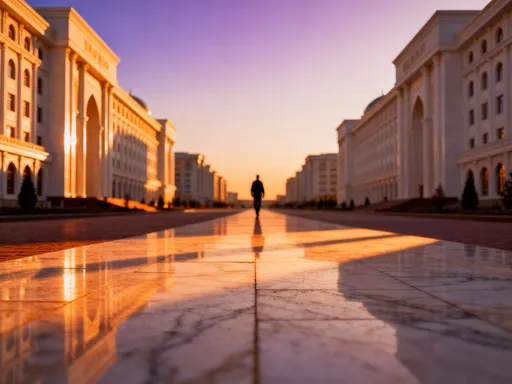
From the moment you step out of Ashgabat International Airport, the city announces itself through contrast. The desert landscape, vast and pale under the Turkmen sun, gives way to an urban expanse that seems almost unreal in its precision. Buildings rise with geometric clarity, their white marble exteriors catching the light in a way that softens edges and blurs shadows. There is no clutter, no haphazard signage, no tangled wires—a rarity in much of the world, especially in Central Asia. The air is still, the streets wide and largely empty, and the silence is not oppressive but deliberate, as if the city has chosen serenity over stimulation.
The use of white marble is not merely aesthetic—it is symbolic. Ashgabat holds the Guinness World Record for the highest concentration of white marble-clad buildings, a title the city wears with quiet confidence. This architectural choice was formalized in the early 2000s as part of a national reconstruction effort following a devastating earthquake in 1948 and later political shifts. The result is a capital that appears newly minted, as though time has been reset and history rewritten in stone. Visitors often describe the sensation of walking through Ashgabat as dreamlike, not because it is fantastical, but because it defies expectations of what a living city should feel like.
Yet, for all its grandeur, there is a distance to Ashgabat. It does not invite casual interaction. There are few street vendors calling out to passersby, minimal graffiti, and almost no spontaneous gatherings. The absence of urban noise—honking cars, loud conversations, music spilling from shops—can feel unnerving at first. But this stillness is not emptiness. It is a different rhythm, one governed by order and intention. The city does not rush; it composes itself, each structure a note in a carefully orchestrated symphony of space and light.
The Heart of the Cityscape: Turkmenistan’s Grand Boulevards
At the core of Ashgabat’s urban identity are its grand boulevards—broad, meticulously landscaped avenues that serve as both arteries and stage sets. Kopetdag Avenue, one of the most prominent, stretches for kilometers with uninterrupted symmetry. Lined with young trees planted at precise intervals, flanked by government buildings and cultural institutions, it feels less like a street and more like a ceremonial corridor. These roads are not designed for congestion; they are built for procession, for visibility, for the slow, dignified movement of a city that wants to be seen.
The scale of Ashgabat’s planning is difficult to grasp at first. Blocks are large, intersections few, and pedestrian crossings clearly marked but often underused. This is not a city shaped by organic growth, but by top-down vision. The layout reflects a desire for control, clarity, and monumentality. Public squares appear with geometric regularity—octagonal, circular, star-shaped—each one anchoring a district with a central fountain, statue, or monument. The sense of order extends to the smallest details: trash bins are uniform, streetlights identically designed, and even the placement of benches follows a strict aesthetic code.
This emphasis on spatial harmony influences how people experience the city. Locals often travel by car or taxi, not only because of the heat but because distances are vast and walking routes can feel isolating. Yet, for those who do walk, especially in the early morning or late evening, there is a meditative quality to the experience. The wide sidewalks, clean air, and absence of visual noise create a rare urban tranquility. Families stroll, children play near fountains, and elderly couples sit on benches beneath the shade of young trees. Life unfolds gently, within the framework of a city that prioritizes appearance and order, but still accommodates the quiet rhythms of daily existence.
Nightfall in Marble: How the City Transforms After Dark
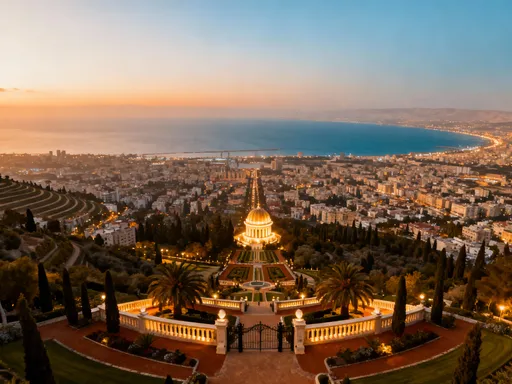
As the sun dips below the Kopet Dag mountains, Ashgabat undergoes a transformation that borders on theatrical. The white marble, which by day glows softly under the sun, becomes a canvas for artificial brilliance. Over 10,000 streetlights flicker to life, their golden hue casting long, elegant shadows. Building façades illuminate in sequence—first the government offices, then the hotels, then the cultural centers—until the entire city appears to be lit from within. This is not subtle lighting; it is a statement. Ashgabat does not fade into the night. It declares itself.
One of the most striking displays occurs at Independence Park, where a nightly light and sound show draws small but steady crowds. Projections dance across fountains and monuments, telling stories of national history, independence, and cultural pride through music and moving images. The Arch of Neutrality, a towering gold-plated monument that rotates to follow the sun during the day, becomes a focal point of illumination at night. Its three legs, each supporting a viewing platform, are outlined in bright white LEDs, making it visible from nearly every corner of the city.
The effect is dazzling, even overwhelming. For visitors accustomed to cities where night brings dimming and retreat, Ashgabat’s nocturnal brilliance can feel excessive. There is no darkness here, no corners left unlit. Every major building, bridge, and roundabout is part of the display. While this creates a sense of safety and modernity, it also contributes to the city’s impersonal atmosphere. The lights are not for intimacy; they are for spectacle. It is as if Ashgabat is performing for an audience that is not quite present—perhaps for the world, perhaps for itself. Yet, there is beauty in this artificial radiance, a kind of poetic excess that speaks to a nation eager to be seen, to be remembered, to shine.
Hidden Layers: Glimpses of Daily Life Beyond the Facade
Beyond the marble-clad government buildings and manicured plazas, Ashgabat reveals another dimension—one of color, warmth, and routine. In the residential neighborhoods that lie just off the main avenues, the city’s true pulse can be felt. Here, apartment blocks are simpler, often painted in soft blues, yellows, and pinks. Laundry hangs from balconies, children kick balls in courtyards, and the smell of freshly baked bread drifts from small neighborhood bakeries. These areas do not appear in official brochures, but they are where most Turkmen families live, work, and gather.
One of the most authentic experiences in Ashgabat is a visit to the Tolkuchka Bazaar, one of Central Asia’s largest traditional markets. Located on the city’s outskirts, it operates on weekends and draws vendors and shoppers from across the country. The atmosphere is a vivid contrast to the city center—bustling, colorful, and full of sound. Stalls overflow with handwoven carpets, dried fruits, spices, and live poultry. Elderly women in colorful dresses bargain over prices, while men in traditional wool hats inspect sacks of nuts and grains. The air is thick with the scent of cumin, smoke, and ripe melons. This is not a tourist performance; it is real, unfiltered life.
Smaller neighborhood cafés, known locally as chayhanas, offer another window into daily rhythms. These modest establishments serve strong black tea, flatbreads, and simple meat dishes in settings that are humble but welcoming. Men often gather in the late afternoon to talk, play backgammon, or sip tea in silence. Women visit with family or friends, sharing meals on low tables surrounded by embroidered cushions. These spaces are not grand, but they are alive—with conversation, laughter, and the quiet comfort of routine. They remind visitors that behind Ashgabat’s polished image is a people rooted in tradition, resilience, and community.
Architectural Ambition: Monuments With a Message
Ashgabat’s skyline is dominated by structures that are more than just buildings—they are declarations. Each major monument carries symbolic weight, reflecting national values, historical narratives, and political identity. The Monument of Neutrality, once topped by a rotating statue of former President Saparmurat Niyazov, stands as a testament to Turkmenistan’s official stance of permanent neutrality in international affairs. Though the statue was removed in 2010, the monument remains, a three-legged tower of marble and metal that continues to serve as a national icon.
The Presidential Palace, with its colonnaded façade and grand staircase, evokes classical European architecture while asserting sovereign dignity. It is not open to the public, but its presence is felt—both physically and symbolically—throughout the city. Similarly, the Ashgabat Tower, a sleek, futuristic structure rising over 200 meters, represents the country’s aspirations toward modernity and technological progress. At night, it becomes a beacon, its LED panels displaying rotating patterns and national colors.
Other notable structures include the Turkmen Carpet Museum, housed in a building shaped like a traditional yurt, and the National Museum of History, which showcases artifacts from ancient Margiana to the Soviet era. These institutions are not merely cultural repositories; they are part of a broader effort to define and preserve national identity. The architecture itself—grand, symbolic, often monumental—serves as a visual language, communicating strength, continuity, and pride to both citizens and visitors. As an outsider, one does not need to interpret the politics behind these structures to recognize their impact. They are designed to impress, to endure, and to remind.
Navigating the City: Practical Insights for Future Visitors
For those planning to visit Ashgabat, understanding the city’s scale and rhythm is essential. The urban layout is logical but sprawling, and walking long distances in the summer heat—often exceeding 40°C (104°F)—is not advisable. The best times to explore on foot are early morning, between 6:00 and 9:00 AM, or late evening, after 7:00 PM, when temperatures cool and the city lights begin to glow.
Public transportation exists but is limited in scope. The Ashgabat Metro, opened in 2011, is clean, modern, and efficient, though it consists of only one line serving key areas. Taxis are the most practical option for getting around. Official yellow taxis are metered, but many visitors prefer to negotiate fares in advance. Ride-hailing apps are not widely used, so having a local contact or guide can be helpful. Some hotels offer guided city tours, which provide valuable context and access to sites that may be difficult to visit independently.
Language is another consideration. While Turkmen is the official language, Russian is widely spoken, especially among older generations and in government or service sectors. English is less common, so carrying a phrasebook or translation app is recommended. Basic greetings in Turkmen—such as Salam (hello) and Rahmat (thank you)—are appreciated and can open doors to friendly interactions.
Photography in public spaces is generally permitted, but discretion is advised. Government buildings, military installations, and infrastructure sites are off-limits for photography, and some security personnel may ask visitors to stop taking pictures. It is always best to observe local behavior and ask for permission when photographing people. Dress modestly, especially when visiting religious or official sites, and respect local customs. Women should consider covering shoulders and knees, and men should avoid wearing shorts in formal areas.
Climate preparation is crucial. Sunscreen, a wide-brimmed hat, and plenty of water are essential, even in spring and autumn. Indoor spaces are often heavily air-conditioned, so a light jacket is useful. Most hotels and restaurants are clean and comfortable, with international standards of hygiene. Tap water is not recommended for drinking; bottled water is widely available and affordable.
Why Ashgabat Stays With You—Even in Silence
Ashgabat does not charm in the way that Istanbul enchants with its bazaars or Paris seduces with its cafés. It does not energize like Tokyo or surprise like Marrakech. Instead, it lingers in the mind as a place of deliberate contrast—between silence and spectacle, between monument and memory, between vision and reality. Few cities are so clearly shaped by a singular idea, so unapologetically designed to convey a message. Ashgabat is not accidental. It is intentional, from the angle of its boulevards to the color of its lights.
What makes the city unforgettable is not just its marble or its monuments, but the quiet dignity with which it exists. It does not seek validation, nor does it rush to explain itself. It simply is—polished, poised, and profoundly still. For visitors, this can be disorienting at first. We are used to cities that shout, that overflow with noise and life. Ashgabat whispers. It invites contemplation, not consumption. It asks not to be loved, but to be seen.
And in that seeing, something shifts. The emptiness becomes space. The silence becomes respect. The grandeur becomes not arrogance, but aspiration. Ashgabat is not a city for everyone, but for those willing to slow down, to look closely, and to listen to what is not said, it offers a rare gift: the chance to witness a nation’s self-portrait, rendered in marble, light, and quiet resolve. It is a capital that does not forget its past, even as it builds a future that gleams under an endless sky.