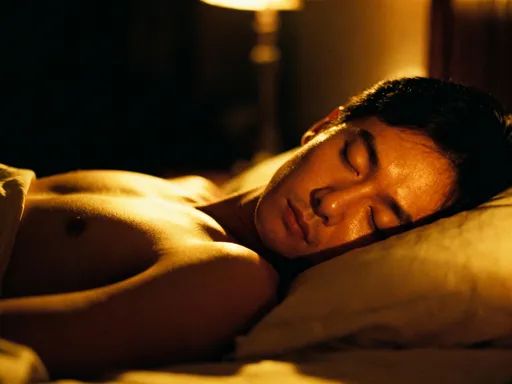
It’s Not Just a Workout: How Evening Fitness Videos Transformed My Wind-Down Routine
After a long day, I used to scroll mindlessly through my phone, only to feel more drained. Then I swapped late-night browsing for online fitness sessions—gentle stretches, breathing exercises, guided movements—right before bed. Surprisingly, it didn’t just ease my body; it calmed my mind. I slept deeper, woke up lighter, and started valuing those quiet moments. This isn’t about intense training—it’s about finding peace, presence, and personal care in the last hour of the day. And if you’ve ever felt too tired to rest, yet too restless to sleep, this might be exactly what you need.
The Hidden Struggle of Modern Evenings
Let’s be honest—how many of us truly wind down anymore? We sit at desks all day, then come home and sit some more. Our bodies are still, but our minds are racing. The to-do list loops in the background. That email we sent replays in our heads. And then, without even thinking, we reach for our phones. One scroll turns into twenty minutes. Then an hour. Suddenly, it’s midnight, and we’re not any more relaxed. If anything, we feel more on edge, more mentally cluttered, more disconnected from ourselves.
I used to think this was just how evenings were supposed to feel. Like we earned the right to zone out after doing so much. But over time, I realized that what I thought was rest was actually just another form of exhaustion. The blue light, the constant input, the emotional rollercoaster of social media—it wasn’t helping me recover. It was keeping me stuck in low-grade stress. My body never really switched off. And when I finally did try to sleep, my mind was still wide awake, replaying the day or worrying about tomorrow.
What I didn’t know then was that I wasn’t alone. So many women I’ve talked to—mothers, professionals, caregivers—describe the same cycle. We give everything during the day, and by night, we have nothing left to give to ourselves. We don’t collapse into rest; we collapse into distraction. And the irony is, we’re doing it all in the name of relaxation. But real rest? True restoration? That’s something different. It’s not about numbing out. It’s about coming back to yourself. And for me, that journey began with a simple question: What if I stopped scrolling and just… moved a little instead?
Discovering a Different Kind of Nightly Ritual
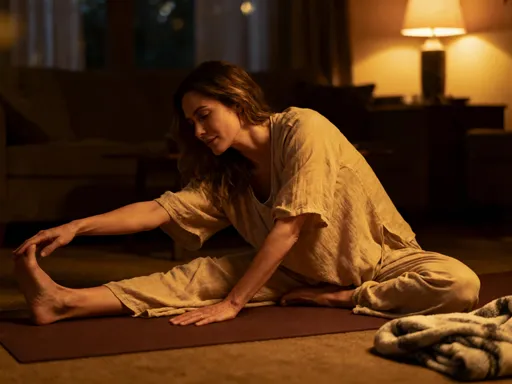
The change didn’t come from a grand plan. It started small—almost by accident. One night, I was searching for something calming on YouTube, and I stumbled upon a 15-minute evening yoga video. The title said “Gentle Stretch for Deep Sleep.” I remember thinking, I don’t have time for this. I’m too tired. But then I laughed at myself. Too tired to stretch? Since when did that become the thing I couldn’t do? So I hit play. I rolled out an old mat in the corner of my living room. I dimmed the lights. And for the first time in weeks, I paid attention to how my body actually felt.
The instructor’s voice was soft, steady. She didn’t tell me to push or perform. She said things like, “Let your breath lead you,” and “It’s okay to move slowly.” I didn’t break a sweat. I didn’t feel like I was “working out.” But by the end, something had shifted. My shoulders weren’t hunched by my ears anymore. My jaw had unclenched. And my mind—usually buzzing—was quiet. Not forced. Not numbed. Just… calm.
That night, I fell asleep faster than I had in months. And when I woke up, I didn’t feel like I’d been hit by a truck. I felt… rested. Not because I’d done anything intense, but because I’d finally given myself permission to slow down. That one session didn’t fix everything, but it showed me something important: I didn’t need another chore. I needed a ritual. And this—this gentle, kind, no-pressure movement—felt like the one I’d been missing.
Since then, I’ve explored different videos—guided breathing, restorative yoga, even short mindfulness flows. Some nights, I only do five minutes. Some nights, I fall asleep halfway through. And that’s okay. The point isn’t perfection. It’s presence. It’s choosing to end the day with care instead of consumption. And slowly, that small shift has changed everything.
How Gentle Movement Prepares the Body for Sleep
You might be wondering—how can something so simple actually make a difference? Isn’t sleep just about turning off the lights and closing your eyes? Well, science tells us it’s a little more nuanced than that. Our bodies don’t go from “on” to “off” instantly. They need signals. And gentle evening movement is one of the most powerful signals we can give.
Here’s how it works: when we sit all day—driving, working, folding laundry, helping kids with homework—our muscles tighten. Our hips get stiff. Our necks carry tension. And even if we don’t feel it in the moment, that physical tightness tells our nervous system we’re still “on alert.” But when we stretch, when we breathe deeply, when we move with intention, we send a different message. We’re saying, It’s safe to relax now.
Specifically, these slow movements activate what’s called the parasympathetic nervous system—the part of your body that handles rest, digestion, and recovery. When this system is engaged, your heart rate slows, your breathing deepens, and your stress hormones—like cortisol—start to drop. You’re not forcing sleep. You’re creating the physical conditions that make sleep possible.
And the best part? You don’t need any special skills or equipment. No gym. No expensive classes. Just a few minutes, a quiet space, and a willingness to listen to your body. I’ve done these routines in pajamas, on carpet, even in hotel rooms while traveling. The videos I follow don’t ask me to hold impossible poses. They guide me through simple movements—reaching my arms overhead, folding forward, twisting gently. Each motion helps release the physical weight of the day. It’s not about looking a certain way. It’s about feeling different. And when your body finally feels safe, your mind follows.
Building Emotional Safety Through Consistent Rhythm
One of the most unexpected benefits of this practice hasn’t been physical—it’s been emotional. Night after night, doing the same short sequence, I’ve started to feel something I didn’t expect: safety. Not the kind of safety that comes from locking doors or checking the news. But an inner safety. A quiet knowing that this time is mine. That I don’t have to do anything else. I don’t have to answer anyone. I don’t have to fix anything. I just get to be here.
Life as a woman, especially in midlife, can feel like a series of endless demands. Kids, work, aging parents, household chores—it’s easy to feel like you’re constantly responding to someone else’s needs. And while we love our families and our responsibilities, it’s also true that we can lose ourselves in the process. We become so good at caring for others that we forget how to care for ourselves.
But these evening sessions? They’ve become my quiet rebellion. My way of saying, I matter too. And the consistency is what makes it powerful. It’s not about doing it perfectly every night. It’s about showing up, again and again, with kindness. Over time, my mind has learned to associate this routine with release. When I roll out the mat, it’s like my nervous system sighs and says, Oh, right. This is the time we let go.
It’s not dramatic. No life-changing epiphanies. But there’s a deep comfort in knowing that, no matter how chaotic the day was, I have this one predictable, peaceful moment. And in a world that feels increasingly unpredictable, that consistency has become its own kind of healing.
Fitting It Into Real Life—No Willpower Needed
I know what you might be thinking: That sounds nice, but I’m too tired. I barely have time to brush my teeth. And I get it. I’ve been there. The idea of adding one more thing to the evening routine can feel overwhelming. But here’s the truth: this isn’t another task. It’s not another box to check. It’s the opposite. It’s permission to stop checking boxes.
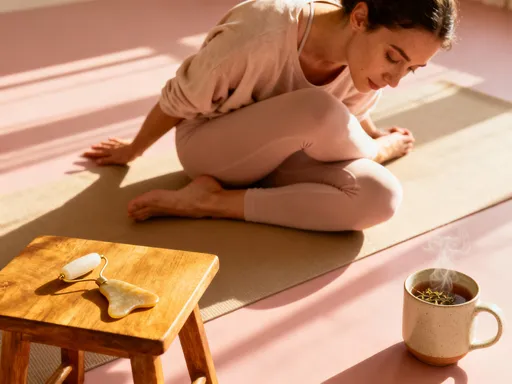
The key is to make it easy—so easy that resistance doesn’t have a chance. I keep my mat unrolled in the corner. I have a playlist of my favorite evening videos saved, so I don’t waste time searching. I pair it with something I already enjoy—like sipping herbal tea or lighting a candle. That way, it doesn’t feel like an obligation. It feels like a treat.
And if I’m truly exhausted? I do less. Sometimes, it’s just five minutes of lying on my back with my legs up the wall. Sometimes, I follow a breathing exercise while still in bed. The point isn’t duration. It’s intention. It’s choosing to end the day with something that nourishes you, instead of something that drains you.
I also let go of guilt. I used to feel guilty for not doing more—more exercise, more productivity, more self-improvement. But now I see this practice for what it is: an act of self-respect. I’m not doing it to change my body. I’m doing it to honor how I feel. And when you reframe it that way, it stops being another chore and starts being a gift.
Unexpected Gains: More Energy, Better Mornings, Deeper Self-Awareness
The changes didn’t happen overnight. But over weeks and months, I started to notice little shifts. I wasn’t waking up with that heavy, groggy feeling. My mornings felt… easier. I wasn’t rushing to catch up on sleep or scrambling to get moving. I had more energy—not the jittery kind from coffee, but a steady, calm alertness.
And something else surprised me: I became less reactive. When the kids argued over breakfast, I didn’t snap. When I got a stressful email, I paused before responding. It was like my emotional baseline had shifted. I wasn’t just sleeping better—I was living better.
I also started to notice things about my body that I’d ignored for years. The way my left hip felt tighter than the right. How my breath got shallow when I was anxious. These weren’t problems to fix—they were signals to listen to. And that awareness has deepened my relationship with myself in ways I didn’t expect.
People around me noticed too. My daughter said, “You seem calmer lately.” My sister asked if I’d started meditating. I hadn’t—well, not formally. But this nightly practice had become its own kind of meditation. It wasn’t about emptying my mind. It was about returning to it. About remembering who I am beneath the roles and responsibilities.
And that, more than anything, has been the greatest gain. Not a flatter stomach or a faster mile time. But a deeper sense of self. A quiet confidence that comes from knowing I’m taking care of me—not perfectly, but consistently.
Why This Small Change Feels Like a Big Gift
When I look back at the years I spent scrolling until I passed out, I don’t judge myself. I was doing the best I could with what I knew. But now, I see how much I was missing. I was skipping the most important part of the day—the part where I reconnect with myself.
This simple habit of doing a gentle fitness video at night hasn’t just improved my sleep. It’s changed my relationship with time, with rest, with myself. It’s taught me that care doesn’t have to be complicated. That peace doesn’t have to be earned. That showing up for yourself, in small ways, day after day, is one of the most powerful things you can do.
In a world that glorifies busy, this is a quiet act of resistance. It’s saying, I don’t have to be on all the time. It’s choosing to end the day not with noise, but with stillness. Not with input, but with presence. And in that stillness, I’ve found something I didn’t know I was looking for: a deeper sense of belonging—to my body, to my breath, to my life.
If you’ve ever felt too full to rest, too tired to relax, too busy to care for yourself—try this. Just one night. Swap ten minutes of scrolling for ten minutes of gentle movement. Let your body breathe. Let your mind soften. And see what happens when you give yourself the gift of a true wind-down. It might not feel like much in the moment. But over time, it could change everything.