Dipping My Toes In: How Swimming Gave Me a Second Chance
Have you ever felt stuck in recovery, like your body just won’t cooperate? I was there—until I found the water. Gentle, forgiving, and surprisingly powerful, swimming became my rehab lifeline. No impact, no pressure, just progress. If you're starting over after injury or stiffness, this journey might be exactly what you need. What began as a hesitant attempt to move without pain turned into a profound transformation—not only in strength and mobility but in mindset. The pool didn’t ask me to be fast or perfect. It only asked me to show up. And in return, it gave me back the simple joy of movement.
The Breaking Point: When Movement Became Pain
There was a time when even the smallest actions felt like battles. Bending down to tie a shoe sent sharp jolts through my lower back. Standing up from a chair required a slow, deliberate effort, bracing myself against the armrests. Walking up a flight of stairs left me breathless and aching for hours. What had once been effortless—carrying a laundry basket, reaching for a high shelf, even turning in bed—had become painful reminders of how much I’d lost. It wasn’t a sudden injury but years of wear, compounded by poor posture and a sedentary routine, that had worn my body down. I wasn’t elderly, but I felt fragile, like a machine running on rusted gears.
I tried to fix it the way most people do—with land-based exercise. I started with walking, believing that gentle movement would loosen me up. But after a few days, the stiffness in my knees worsened. I switched to yoga, hoping for improved flexibility, but certain poses triggered flare-ups in my hips. Even using a stationary bike, which I’d been told was low-impact, left me with throbbing discomfort in my lower back. Each attempt to heal felt like it was making things worse. I wasn’t getting stronger—I was just learning new ways to hurt.
The emotional weight of this physical decline was just as heavy. I felt frustrated, even embarrassed, that I couldn’t do what others did without a second thought. I began to avoid social outings that involved walking or standing for long periods. I relied more on pain relievers, not because they fully worked, but because I needed something to take the edge off. I wasn’t living—I was managing. The worst part was the fear: What if this was just the beginning? What if I never got better? I knew I needed a different approach, one that didn’t punish my body for trying to heal.
Why Water? The Science Behind Buoyancy and Healing
It was my physical therapist who first suggested swimming. At first, I dismissed it. I wasn’t a strong swimmer, and the idea of being in a pool felt intimidating. But she explained something I hadn’t considered: water changes the rules of movement. In waist-deep water, the body supports about 50% of its weight. In chest-deep water, that increases to around 75%. And when fully submerged, buoyancy can support up to 90% of body weight. That means joints bear far less load, reducing stress on injured or arthritic areas. For someone whose body ached under its own weight on land, this was revolutionary.
Beyond buoyancy, water offers other healing advantages. Hydrostatic pressure—the force exerted by water on the body—helps improve circulation. This gentle compression encourages blood flow back to the heart, reducing swelling in limbs and promoting the delivery of oxygen and nutrients to tissues. This is especially beneficial for people recovering from surgery or managing chronic inflammation. Swelling, which often delays healing, can be naturally minimized through regular aquatic activity. Additionally, the resistance of water is about 12 times greater than air. This means every movement—kicking, pulling, even walking in water—builds strength gradually, without the jarring impact of weights or machines.
Compared to other low-impact exercises, swimming stands out. Walking, while accessible, still involves repeated impact on joints with each step. Cycling reduces impact but limits range of motion and can strain the lower back or knees if posture isn’t perfect. Swimming, however, engages nearly every major muscle group in a fluid, continuous motion. It’s cardiovascular, strength-building, and flexibility-enhancing—all at once. Research has shown that aquatic exercise can significantly improve function in people with osteoarthritis, fibromyalgia, and post-surgical conditions. It’s not just easier on the body; it’s more effective for rebuilding movement from the ground up.
First Splash: Facing Fear and Starting Small
Walking into the community pool for the first time, I felt more vulnerable than I expected. I wasn’t alone—there were older adults in water aerobics classes, children splashing in the shallow end—but I worried about being judged. Would I look clumsy? Would I struggle to keep up? My swimsuit felt too tight, my movements too slow. I stood at the edge, gripping the rail, hesitant to let go. The water looked inviting, but my body remembered pain, not pleasure. Letting go of that fear was the first real step.
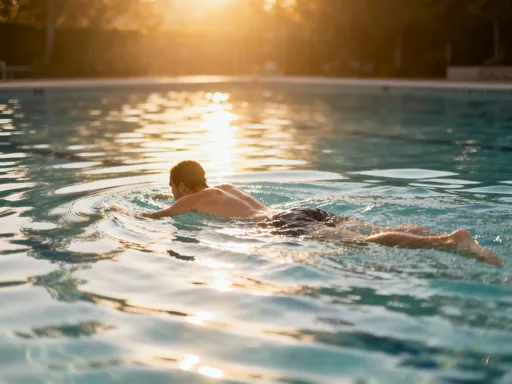
My first session lasted only ten minutes. I didn’t swim a single lap. Instead, I held onto the side and practiced kicking, letting the water support my legs. Then I tried floating on my back, focusing on my breathing. At first, I panicked—my chest tightened, and I bolted upright. But I reminded myself: I was safe. The water would hold me. I tried again, exhaling slowly through my nose, inhaling through my mouth. This time, I stayed afloat. That small victory—floating without fear—felt monumental. I ended the session with a few slow arm movements, mimicking freestyle without lifting my head. I was exhausted, but not in a painful way. I felt used, in the best sense of the word.
Learning to breathe rhythmically was one of the hardest parts. On land, breathing is automatic. In water, it becomes intentional. I had to retrain my instincts—exhale underwater, turn my head to inhale, all without gulping water or tensing up. It took practice, but each time I did it right, I felt a little more in control. I started using a pool noodle to support my legs while I practiced arm strokes. A kickboard helped me focus on leg movement without worrying about balance. These tools weren’t signs of weakness—they were bridges to independence. They allowed me to isolate movements, build confidence, and progress at my own pace.
Stroke by Stroke: Rebuilding Motion and Muscle Memory
As my comfort grew, so did my range of motion. I began learning basic strokes, starting with freestyle and backstroke. Freestyle, with its alternating arm movements and rhythmic breathing, engaged my shoulders, core, and legs in a coordinated flow. Backstroke eliminated the breathing challenge entirely, letting me focus on form and endurance. Both strokes encouraged full-body movement without sudden jerks or strain. I started with just one length of the pool, resting at the wall before turning back. Over time, I added another lap, then another. The progress wasn’t dramatic, but it was steady.
Each stroke activated muscles in ways land exercises couldn’t. The resistance of water required constant engagement, building strength without heavy loads. My shoulders, once stiff and painful, began to move more freely. My core, which I’d neglected for years, started to stabilize my movements. Even my legs, weakened from inactivity, gained power from consistent kicking. I noticed changes beyond the pool: I could stand straighter, reach higher, twist more easily. These weren’t just physical gains—they were signs that my body was relearning how to move safely and efficiently.
Tracking progress helped me stay motivated. At first, I measured success in minutes: Could I stay in the water for 15 minutes without pain? Then in laps: Could I swim two lengths without stopping? Eventually, I could complete ten laps with minimal rest. My range of motion improved—my shoulders lifted higher, my hips rotated more smoothly. I wasn’t racing anyone, but I was moving better than I had in years. I also learned to recognize common beginner mistakes: overreaching with the arms, holding my breath, or tensing my neck. These habits wasted energy and increased strain. By focusing on smooth, controlled movements, I made each stroke more effective and less taxing.
Beyond the Pool: How Swimming Changed My Daily Life
The benefits of swimming spilled into every part of my day. One of the first changes I noticed was in my sleep. For years, I’d woken up stiff and sore, but now I slept more deeply and woke feeling looser, more refreshed. I stopped reaching for pain relievers every morning. The constant ache in my back and knees faded, not completely, but enough that I could ignore it most of the time. I had more energy—real energy, not the jittery kind from caffeine, but a steady, quiet strength that carried me through chores, errands, and even long walks with my dog.
Simple movements became joyful again. I could bend to pick up a dropped pen without wincing. I climbed stairs two at a time, something I hadn’t done in years. I carried grocery bags without needing to stop and rest. These weren’t grand achievements, but they restored a sense of normalcy I hadn’t realized I’d lost. I felt more capable, more independent. My confidence grew—not just in my body, but in my ability to take care of myself.
The mental shift was just as powerful. Chronic pain had made me anxious, always bracing for the next flare-up. Swimming gave me a sense of control. In the water, I wasn’t waiting for pain—I was moving through it, past it. The rhythmic strokes, the sound of water, the focus on breathing—it all created a meditative effect. My mind quieted. Worries didn’t disappear, but they lost their urgency. I began to see my body not as an enemy, but as an ally. Friends and family noticed the change. “You seem lighter,” my sister said. “Not just in weight—like you’re carrying less.” I hadn’t realized how much emotional weight I’d been holding until I started to let it go.
Staying Safe: Working with Professionals and Listening to Your Body
Swimming helped me heal, but it wasn’t a solo journey. I worked closely with my physical therapist, who helped me design a routine that matched my needs. She taught me proper form, recommended safe entry and exit techniques, and suggested modifications for my specific limitations. She also reminded me that healing isn’t linear—some days would feel better than others, and that was okay. Her guidance kept me from pushing too hard or reinforcing bad habits. If you’re considering swimming for rehabilitation, consulting a healthcare professional is essential. They can identify contraindications, recommend stroke types, and help you set realistic goals.
Safety also means listening to your body. Discomfort is different from pain. A muscle working feels warm and engaged; a joint under strain feels sharp or persistent. I learned to distinguish between the two. If a stroke caused pain, I modified it or switched to a gentler movement. I never skipped warm-ups—walking in chest-deep water for five minutes helped prepare my muscles. I always ended with a cooldown, floating or slow swimming to ease my heart rate down. Hydration mattered too—just because I wasn’t sweating on land didn’t mean my body wasn’t working. Drinking water before and after each session kept me feeling my best.
Progress came from consistency, not intensity. I didn’t need to swim fast or long to benefit. Three times a week, 20 to 30 minutes at a time, was enough to make a difference. The key was showing up, even on days when I didn’t feel like it. Over time, those small efforts added up. I avoided common pitfalls—like comparing myself to stronger swimmers or trying to do too much too soon—by focusing on my own journey. Healing isn’t about speed. It’s about showing up, one stroke at a time.
Making It Stick: Turning Rehab Into a Lifelong Habit
What began as a medical necessity became a source of joy. Swimming stopped being something I did to fix myself and became something I looked forward to. The pool became my sanctuary—a place where I could move freely, think clearly, and feel strong. I no longer saw it as rehab. I saw it as a promise I made to myself, a daily act of care. I started scheduling my sessions like appointments, protecting that time as non-negotiable. I invited a friend to join me, and though she wasn’t a strong swimmer either, we encouraged each other. We didn’t race. We didn’t compete. We just moved.
For long-term success, consistency matters more than perfection. Finding a routine that fits your life is key. Some people prefer early morning swims; others do better in the evening. I found midday sessions worked best for me—after the kids were at school, before the afternoon rush. Joining a beginner swim group helped me stay accountable and meet others on similar journeys. We shared tips, celebrated small wins, and reminded each other that progress isn’t always visible. The long-term benefits of aquatic exercise go beyond recovery. Regular swimming supports joint health, improves balance, and enhances cardiovascular fitness. For people managing chronic conditions, it offers a sustainable way to stay active without flare-ups.
Healing isn’t about returning to who you were. It’s about becoming who you can be, with the tools you have. Swimming gave me a second chance—not to be pain-free, but to live fully despite discomfort. It taught me patience, resilience, and the power of gentle persistence. If you’re struggling with stiffness, injury, or the frustration of slow recovery, consider the water. You don’t need to be a strong swimmer. You don’t need to go fast. You just need to dip your toes in. Let the water hold you. Let it teach you how to move again. One stroke at a time, you might find, like I did, that you’re stronger than you ever knew.