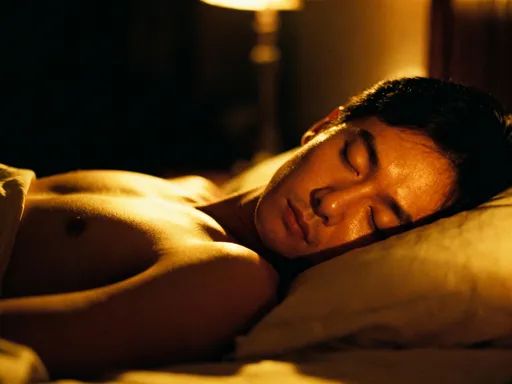
How Yoga and TCM Healing Changed My Recovery Game
After an injury left me stiff and frustrated, I turned to a mix of yoga, meditation, and traditional Chinese medicine—not out of trend, but out of desperation. What started as daily 10-minute stretches grew into a powerful rehab rhythm. I noticed real shifts: less stiffness, better sleep, and way more energy. This isn’t a miracle fix—it’s practical, repeatable, and rooted in balance. If your recovery feels stuck, maybe it’s time to rethink the approach. The body is not a machine that simply needs repairs; it’s a dynamic system that thrives on harmony. When movement, breath, and internal balance align, healing isn’t just possible—it becomes sustainable.
The Breaking Point: When Standard Rehab Wasn’t Enough
There came a moment when the progress stopped. After weeks of physical therapy, prescribed exercises, and anti-inflammatory medication, the pain didn’t vanish—it merely settled in, like an unwelcome guest who refused to leave. Simple tasks like bending to tie shoes or standing from a chair became reminders of limitation. The frustration wasn’t only physical; it seeped into daily life, affecting mood, sleep, and confidence. I had followed the protocol exactly—three sets of ten, ice after activity, rest when needed—yet my body wasn’t responding as expected. It was discouraging, even isolating, to feel stuck while others seemed to bounce back with ease.
That plateau sparked a quiet desperation, but also curiosity. If the standard path wasn’t enough, what else might support healing? I began reading about holistic approaches—not as replacements, but as complements. I learned that many cultures view recovery not as a mechanical correction, but as a restoration of balance. Traditional Chinese Medicine (TCM), in particular, stood out for its focus on energy flow and the interconnectedness of body systems. At first, the concepts seemed abstract, even foreign, but the more I explored, the more they resonated with my experience. Stiffness wasn’t just tight muscles—it was stagnation. Fatigue wasn’t just lack of sleep—it was depletion. This shift in perspective didn’t dismiss conventional medicine; instead, it expanded the toolkit.
What surprised me most was how emotional the process felt. Healing isn’t only about tissue repair; it’s about reclaiming a sense of control. When physical therapy hit a wall, I began to question not just my body, but my understanding of it. That moment of doubt became a doorway. I started small—gentle stretching in the morning, a few minutes of breathing before bed. These weren’t dramatic interventions, but they were consistent. And slowly, something shifted. Not overnight, but steadily, like a river finding its course again.
Why the Body Heals Better in Balance: TCM’s Take on Recovery
Traditional Chinese Medicine operates on the principle that health arises from balance—between yin and yang, between movement and stillness, between effort and rest. Central to this philosophy is the concept of qi (pronounced “chee”), the vital energy that flows through the body along pathways called meridians. When qi moves freely, the body functions optimally. When it becomes blocked or stagnant, discomfort and illness can arise. In the context of recovery, TCM doesn’t isolate the injured area; it considers the whole person. A sprained ankle, for example, isn’t just a local issue—it may reflect imbalances in the liver meridian, which governs tendons, or the spleen, which supports muscle health.
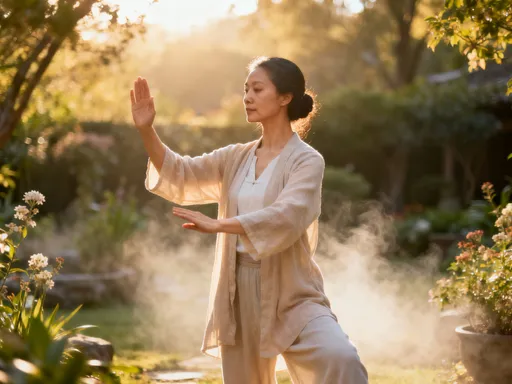
Think of qi like water in a stream. When the flow is smooth, everything thrives. But if debris clogs the channel—like inflammation, stress, or poor circulation—the water slows or stops. Tissues don’t receive the nourishment they need, and waste products build up, leading to pain and delayed healing. This metaphor helped me understand why rest alone wasn’t enough. My body needed support in clearing the “debris” of injury—not just physically, but energetically. TCM offers several tools to restore flow: acupuncture, herbal therapy, moxibustion (gentle heat applied to specific points), and mindful movement practices like qigong.
Acupuncture, perhaps the best-known TCM modality, involves inserting fine needles into specific points along meridians. Research suggests it may stimulate nerve pathways, increase blood flow, and modulate pain signals. For me, sessions didn’t erase pain instantly, but they created space for relief—like turning down the volume on a constant alarm. Herbal formulas, prescribed by a licensed practitioner, also played a role. Warming herbs like ginger and cinnamon supported circulation, while others like turmeric and angelica root helped manage inflammation naturally. These weren’t quick fixes, but part of a rhythm that honored the body’s pace.
Equally important was the emphasis on rest cycles. In TCM, rest isn’t passive—it’s active restoration. The body repairs itself most efficiently during deep rest, especially between 11 p.m. and 3 a.m., when organ systems are believed to regenerate. Aligning my sleep schedule with this rhythm made a noticeable difference. I began to feel more restored, even with the same number of hours. This holistic lens didn’t replace medical care; it deepened my understanding of how healing unfolds over time, not just in isolated tissues, but across interconnected systems.
Yoga as Movement Medicine: More Than Just Stretching
Yoga entered my recovery not as a fitness trend, but as movement with intention. Unlike high-intensity workouts that demand output, therapeutic yoga asks for presence. It’s not about how far you can stretch, but how well you can listen. In the early days, even simple poses felt challenging. But that was the point—moving slowly, with awareness, allowed me to reconnect with parts of my body that had gone quiet during injury. Yoga, in this context, became a form of dialogue between mind and body, where each breath and posture offered feedback.
Gentle postures like Cat-Cow (Marjaryasana-Bitilasana) helped restore spinal mobility. The slow, rhythmic motion massaged the vertebrae, released tension in the back, and encouraged fluid movement between joints. Legs-Up-the-Wall (Viparita Karani) became a nightly ritual. Lying on the floor with legs resting vertically against a wall, I experienced subtle shifts—swelling in the calves reduced, circulation improved, and the nervous system settled. These poses weren’t strenuous, but they were effective because they worked with gravity and breath, not against them.
Breathwork, or pranayama, was equally transformative. I learned to inhale deeply into the diaphragm, expanding the belly rather than the chest. This “belly breathing” activated the parasympathetic nervous system, signaling safety to the body. During flare-ups, focusing on slow exhalations—longer than the inhale—helped calm the stress response. It was remarkable how much control I could regain simply by changing my breath. Pain didn’t disappear, but its grip loosened when I wasn’t fighting against it.
Over time, yoga reshaped my relationship with movement. Instead of pushing through discomfort, I learned to honor limits. There was no ego in the practice—only awareness. A pose wasn’t “better” because it looked advanced; it was valuable because it created space, release, or clarity. This mindset spilled into daily life. I moved more mindfully—standing, walking, lifting—with greater alignment and less strain. Yoga wasn’t just rehab; it became a way of living with more ease.
Meditation That Actually Works for Recovery
When pain lingers, the mind can become its own battleground. Thoughts like “Will I ever feel normal again?” or “Why isn’t this healing faster?” loop endlessly, amplifying discomfort. Meditation offered a way out—not by denying pain, but by changing my relationship to it. Scientific studies have shown that mindfulness can reduce the brain’s perception of pain by altering activity in the anterior cingulate cortex and insula, regions involved in emotional processing. In simpler terms, meditation doesn’t remove pain, but it can reduce the suffering around it.
I started with a simple five-minute practice each morning. Sitting comfortably, eyes closed, I focused on the natural rhythm of my breath. When thoughts arose—about chores, worries, or the ache in my shoulder—I acknowledged them without judgment and returned to the breath. This wasn’t about achieving stillness; it was about training attention. Over time, I added a body scan, moving awareness slowly from the toes to the crown of the head. I noticed areas of tension, warmth, or numbness—not to fix them, but to witness them. This practice cultivated a quiet intimacy with my body, a kind of inner listening that conventional rehab rarely emphasized.
What surprised me was how mental rest influenced physical healing. Just as muscles need recovery after exertion, the nervous system needs downtime to reset. Chronic stress elevates cortisol, a hormone that, in excess, can impair tissue repair and weaken immunity. By dedicating time each day to stillness, I lowered my stress baseline. Sleep improved. Inflammation markers, as noted in follow-up blood work, trended downward. These weren’t dramatic changes, but they were consistent. Meditation didn’t cure me, but it created conditions where healing could thrive.
The practice also taught patience. Healing isn’t linear. Some days felt like progress; others felt like setbacks. Meditation helped me sit with uncertainty, to accept that recovery has its own timeline. This wasn’t passive resignation—it was active acceptance. By releasing the need to control every outcome, I conserved energy for what mattered: showing up, breathing, and trusting the process.
Putting It Together: My Daily Rehab Routine
Routine became my anchor. Without structure, even the best intentions fade. My day now begins with a 20-minute sequence that blends TCM principles and gentle yoga. Upon waking, I drink a cup of warm water with lemon and ginger—a TCM-inspired habit to stimulate digestion and warm the body. Then, I move to the floor for a short practice: five rounds of Cat-Cow to awaken the spine, followed by gentle side bends and shoulder rolls. I finish with two minutes of diaphragmatic breathing, hands on belly, setting an intentional tone for the day.
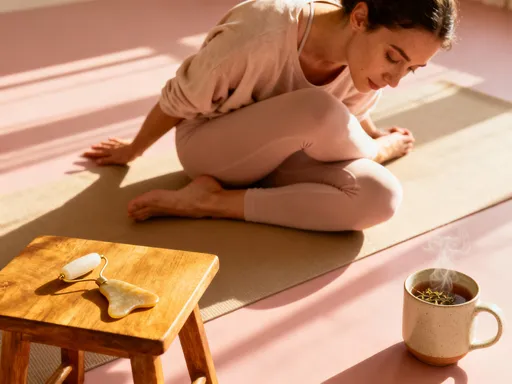
In the evening, the focus shifts to release and restoration. After a light dinner, I apply a heating pad to sore areas for 15 minutes—a simple way to increase blood flow, echoing TCM’s use of moxibustion. Then, I spend 10 minutes in Legs-Up-the-Wall, often paired with soft music or silence. Before bed, I use a gua sha tool—a smooth jade or rose quartz scraper—on my neck and shoulders. Gua sha, when done gently, can reduce muscle tension and promote lymphatic drainage. I apply a light oil and stroke upward along the neck and shoulders, following meridian pathways. It takes less than five minutes, but the sense of release is immediate.
Meditation caps the night. I lie in bed and guide a 5-minute body scan, releasing each part of the body in sequence. If my mind races, I return to the breath. This isn’t about falling asleep quickly; it’s about signaling safety to the nervous system. Over time, this evening rhythm has become non-negotiable—like brushing my teeth. It’s not about perfection; it’s about consistency. Some days, I only manage half the routine. But even then, I’ve learned that small efforts compound. Healing isn’t built in grand gestures, but in daily acts of care.
What Science Says: The Overlap Between TCM, Yoga, and Modern Rehab
While ancient in origin, the principles of TCM and yoga are increasingly supported by modern research. A 2017 meta-analysis published in the Annals of Internal Medicine found that yoga significantly improved pain and function in people with chronic low back pain, with effects comparable to physical therapy. Another study in Frontiers in Human Neuroscience showed that eight weeks of mindfulness meditation reduced cortisol levels and inflammatory markers like interleukin-6. These findings suggest that mind-body practices don’t just feel good—they produce measurable physiological changes.
Acupuncture, too, has gained recognition in integrative medicine. The National Institutes of Health acknowledges its role in managing chronic pain, particularly for conditions like osteoarthritis and migraines. While the exact mechanisms are still being studied, evidence points to acupuncture’s ability to stimulate nerve fibers, release endorphins, and modulate pain signals in the central nervous system. Interestingly, many acupuncture points align with known neurovascular bundles, suggesting a biological basis for their effects. This convergence of tradition and science makes integrative approaches more accessible and credible.
Yoga’s impact on flexibility, balance, and joint health is well-documented. But its benefits extend beyond the physical. Research from Harvard Medical School indicates that regular yoga practice enhances parasympathetic tone, improving heart rate variability—a marker of resilience. This means the body recovers faster from stress, whether physical or emotional. For someone in recovery, this is crucial. Healing demands stability, not constant reactivity. When the nervous system is calmer, tissues repair more efficiently.
These practices don’t contradict modern rehab; they complement it. Physical therapy strengthens muscles; yoga improves neuromuscular coordination. Medication reduces inflammation; herbal support offers natural alternatives with fewer side effects. Imaging confirms structural healing; mindfulness tracks internal shifts. Together, they form a more complete picture of recovery—one that honors both science and the body’s innate wisdom.
Making It Your Own: Practical Tips to Start (Safely)
Integrating these practices doesn’t require overhauling your life. Start small, start safe. First and foremost, consult your healthcare provider, especially if you have chronic conditions, are pregnant, or are undergoing treatment. This isn’t a substitute for medical advice; it’s a way to enhance it. If you’re interested in acupuncture or herbal therapy, seek licensed practitioners—certified by the National Certification Commission for Acupuncture and Oriental Medicine (NCCAOM) or equivalent bodies in your country.
For yoga, look for classes labeled “gentle,” “restorative,” or “therapeutic.” Avoid intense styles like power yoga or hot yoga during recovery. A qualified yoga therapist—someone trained in anatomy and adaptive techniques—can tailor poses to your needs. Many studios and hospitals now offer programs specifically for injury rehab. If in-person classes aren’t accessible, reputable online platforms provide guided sessions with certified instructors.
Meditation can begin with just two minutes a day. Use apps like Insight Timer or Healthy Minds Program, which offer free, science-based practices. Focus on consistency, not duration. Keep a journal to track not just physical changes—range of motion, pain levels—but emotional shifts: mood, sleep quality, mental clarity. This holistic record helps you see progress beyond the obvious.
Remember, this isn’t about perfection. Some days will feel better than others. The goal isn’t to eliminate discomfort entirely, but to build resilience. Healing is not a race; it’s a return to balance. By combining ancient wisdom with mindful action, you’re not just recovering—you’re rebuilding a stronger, more attuned version of yourself.
Recovery isn’t just about fixing what’s broken—it’s about creating the conditions for the body to heal itself. Blending ancient wisdom with mindful movement didn’t just get me back on my feet; it taught me to listen deeper. When science meets tradition, and patience meets practice, real transformation begins. This isn’t a quick fix—it’s a lifelong upgrade.