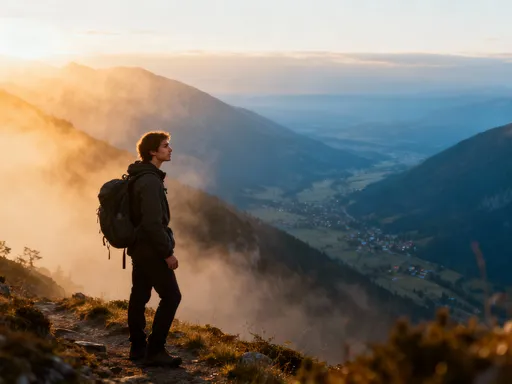
How Hiking Fixed My Mind When Everything Else Failed
You don’t have to be lost in the woods to feel mentally stuck. I was overwhelmed, anxious, and going through the motions—until I laced up my boots and hit the trails. What started as a simple escape became a powerful form of psychological reset. Science backs it: nature doesn’t just clear your head, it rewires it. This is how hiking quietly transformed my mental resilience, one step at a time.
The Breaking Point: When Stress Took Over
For months, life felt like a series of obligations stacked one on top of another. Mornings began with a racing mind, reviewing tasks before feet even touched the floor. Evenings ended in exhaustion, not from physical labor, but from the constant hum of mental strain. There was no single crisis—just a slow accumulation of pressure that dulled emotions and narrowed perspective. The world felt smaller, louder, and more urgent with each passing week. Simple decisions became burdens. Joy, once effortless, now required effort to recall.
Traditional coping strategies offered little relief. Long hours on the treadmill left the body tired but the mind restless. Binge-watching shows promised distraction but often deepened the fog, replacing one form of mental clutter with another. Social media scrolling created a false sense of connection while increasing feelings of isolation. Even conversations with close friends began to feel performative—like I was narrating my life rather than living it. The more I tried to fix myself through routine or distraction, the more entrenched the fatigue became.
The turning point came on a rain-soaked Saturday when a friend insisted I join a short trail walk. There was no deep intention behind it—no hope of transformation, only a vague desire to get out of the house. I agreed not because I believed in nature’s healing power, but because I had run out of alternatives. That first hike wasn’t scenic by postcard standards: the trail was muddy, the sky gray, and my boots were borrowed. But something shifted. Halfway up a gentle ridge, I realized I hadn’t thought about my to-do list in nearly twenty minutes. For the first time in months, my mind was quiet—not empty, but present. That small moment of mental relief planted a seed: perhaps the answer wasn’t in doing more, but in moving differently.
First Steps: Hiking as an Accidental Therapy
The initial hike lasted just over an hour, but its impact lingered. I remember the crunch of gravel underfoot, the damp scent of pine needles, and the occasional flicker of a bird vanishing into the trees. What struck me most wasn’t the scenery, but the stillness inside. The constant loop of self-criticism and worry that usually played in the background had quieted. I wasn’t trying to suppress thoughts; they simply lost their grip. Instead of analyzing the past or rehearsing the future, I noticed the warmth of sunlight breaking through clouds, the way shadows danced on the trail ahead.
This experience aligns with a concept in environmental psychology known as “soft fascination.” Unlike the intense focus required by screens or the jarring stimuli of city life, natural environments engage attention gently. The rustle of leaves, the pattern of bark, the flight of a butterfly—these elements capture interest without demanding effort. This gentle engagement allows the brain’s default mode network, often overactive in stress and anxiety, to rest. Studies suggest that soft fascination supports mental recovery by reducing cognitive fatigue and promoting reflective thinking without rumination.
On that first meaningful hike, I didn’t achieve enlightenment or solve any major life problems. But I experienced something rare: a sense of mental spaciousness. The trail didn’t offer answers, but it created room for clarity to emerge. It was the difference between drowning in thoughts and floating beside them, observing without being consumed. That day, movement became a form of release, and nature became an unexpected therapist—one that didn’t charge by the hour and never interrupted.
Why Nature Works: The Science Behind Mental Reset
Modern neuroscience helps explain why hiking exerts such a profound effect on mental well-being. One key mechanism involves the prefrontal cortex, the brain region responsible for planning, decision-making, and self-reflection. While essential for daily functioning, this area also fuels rumination—the repetitive, often negative, thinking associated with anxiety and depression. Research shows that spending time in natural environments reduces activity in this region, effectively giving the brain a break from overthinking.
A landmark study conducted by Stanford University found that participants who walked for 90 minutes in a natural setting showed decreased neural activity in the subgenual prefrontal cortex—a brain area linked to rumination—compared to those who walked in an urban environment. This wasn’t merely a mood boost; it was a measurable shift in brain function. The natural setting didn’t eliminate thoughts, but it altered their emotional weight, making them feel less personal and urgent.
Further evidence points to the role of cortisol, the body’s primary stress hormone. Elevated cortisol levels over time contribute to anxiety, sleep disturbances, and impaired cognitive function. Multiple studies have demonstrated that spending time in green spaces lowers cortisol levels significantly. For example, a Japanese practice known as “forest bathing” (shinrin-yoku) has been studied extensively, showing that even short visits to forested areas reduce stress markers and improve feelings of well-being. These benefits are not solely due to physical activity; they are amplified by the sensory experience of being in nature—what researchers call “biophilic engagement.”
The psychological impact of hiking differs meaningfully from urban walking. While both involve movement, city environments bombard the senses with noise, traffic, and artificial stimuli, keeping the nervous system in a state of low-grade alert. In contrast, natural trails offer a more harmonious sensory rhythm. The absence of horns, sirens, and flashing signs allows the brain to shift from fight-or-flight mode to a calmer, more reflective state. This shift isn’t dramatic—it’s subtle, almost imperceptible—but over time, it rebuilds mental resilience from the ground up.
The Rhythm of the Trail: Movement, Breath, and Mind
One of the most underrated aspects of hiking is its rhythmic nature. The repetitive motion of walking—left, right, left, right—creates a natural cadence that mirrors meditation. Unlike structured mindfulness exercises that require deliberate focus, hiking offers a form of embodied mindfulness. Attention is gently anchored in the body: the swing of arms, the flex of ankles, the rise and fall of breath. This physical grounding pulls awareness away from mental loops and into the present moment.
Scientifically, this rhythm supports the release of endorphins and dopamine, neurotransmitters associated with pleasure, motivation, and emotional stability. Endorphins, often called the body’s natural painkillers, are released during sustained physical activity and contribute to the “hiker’s high”—a calm euphoria many experience after several miles on the trail. Dopamine, meanwhile, reinforces rewarding behaviors and helps regulate mood. For individuals struggling with low energy or emotional flatness, this neurochemical shift can be profoundly restorative.
Breath plays a crucial role in this process. On the trail, breathing naturally synchronizes with steps, especially on inclines. Inhaling for three steps, exhaling for three—a pattern many hikers adopt unconsciously—mirrors paced breathing techniques used in clinical settings to reduce anxiety. This breath-step rhythm activates the parasympathetic nervous system, which counteracts stress by slowing heart rate and lowering blood pressure. Unlike forced breathing exercises that can feel artificial, trail breathing emerges organically from movement, making it more sustainable and less effortful.
Over time, this rhythmic integration of body and mind fosters a sense of inner coherence. Thoughts don’t disappear, but they lose their dominance. The mind begins to feel less like a chaotic control room and more like a quiet observer. This state isn’t achieved through willpower, but through the simple act of putting one foot in front of the other. The trail, in this way, becomes a moving meditation—one that doesn’t require silence, incense, or special training, only the willingness to step outside and begin.
Solitude Without Loneliness: The Gift of Quiet Companionship
One of the most surprising benefits of hiking is the quality of solitude it provides. In daily life, being alone often feels isolating—especially in urban settings where silence is filled with digital noise or the pressure to be socially available. But on the trail, solitude feels different. It’s not empty; it’s companionable. The presence of trees, birdsong, wind, and water creates a subtle sense of connection that doesn’t demand performance or response.
This form of solitude allows suppressed emotions to surface safely. Without the distractions of daily life, feelings that have been buried under busyness—grief, disappointment, unresolved tension—can emerge and be processed. Many hikers report moments of unexpected clarity or emotional release during long stretches of quiet walking. Tears may come, not from sadness, but from the simple act of feeling again. This emotional thaw is not dramatic; it’s gentle, like ice melting in spring sunlight.
Psychologists distinguish between toxic isolation and restorative solitude. The former is marked by disconnection and negative self-talk; the latter by presence and self-reflection. Nature provides the ideal container for restorative solitude because it offers a nonjudgmental space. A tree does not care about your job title, your mistakes, or your insecurities. In its stillness, you are free to simply be. This absence of judgment creates psychological safety, allowing for honest self-appraisal without shame.
For many women, especially those in caregiving roles, this kind of unstructured, unobserved time is rare. The trail becomes a sanctuary where the self can be reacquainted—not as a mother, partner, or employee, but as a person with inner depth and quiet strength. This reconnection is not selfish; it is essential. Like a battery recharging, time in nature restores the emotional reserves needed to engage meaningfully with others.
From Trail to Daily Life: Building Mental Resilience
The lessons learned on the trail don’t stay on the trail. Over time, the mental shifts experienced during hikes begin to influence everyday behavior. One of the most powerful insights is the value of pacing. On a steep ascent, rushing leads to exhaustion; steady, consistent effort brings progress. This principle translates directly to life’s challenges. Whether managing household responsibilities, navigating change, or recovering from setbacks, the ability to pace oneself—rather than push through—becomes a cornerstone of resilience.
Another key lesson is persistence. Hiking teaches that discomfort is temporary and often necessary. A sore knee, a sudden rainstorm, a misleading trail marker—each presents a choice: turn back or keep going. Repeatedly choosing forward movement builds confidence in one’s ability to handle difficulty. This confidence isn’t loud or boastful; it’s quiet, like the knowledge that you’ve walked ten miles and can walk ten more if needed.
Off the mountain, this translates into improved emotional regulation. Small irritations—a delayed appointment, a misplaced item, a miscommunication—no longer trigger disproportionate reactions. There’s a greater capacity to pause, breathe, and respond rather than react. Focus sharpens, not because of willpower, but because the mind has been trained to return to the present. These changes are not immediate, nor are they dramatic. They accumulate slowly, like layers of sediment, forming a stronger foundation for mental well-being.
Perhaps most importantly, hiking fosters acceptance. Trails are unpredictable. Weather changes. Paths diverge. Some days, the view is obscured by fog. Learning to accept these conditions without resistance builds flexibility in mindset. This acceptance extends to life’s uncertainties, reducing the need for control and increasing tolerance for ambiguity. The trail, in this way, becomes a teacher of grace under pressure—not through words, but through experience.
Making It Sustainable: How to Start and Stick With It
Starting a hiking practice doesn’t require expert gear or extreme fitness. The key is accessibility and consistency. Begin with local trails—parks, nature reserves, or even tree-lined paths in urban areas. The goal is not distance or difficulty, but regular engagement with nature. Even 20 to 30 minutes of walking in a green space can produce measurable mental benefits.
Proper footwear is essential. A good pair of supportive hiking shoes or trail runners can prevent discomfort and injury, making the experience more enjoyable. Dress in layers to adapt to changing weather, and carry water and a small snack. A backpack with a rain cover can hold essentials without adding bulk. As confidence grows, consider investing in a trail map or a hiking app that shows difficulty levels and trail conditions.
Set realistic goals. Instead of aiming for a 10-mile trek on the first outing, start with a one-mile loop. The objective is to build a habit, not to prove endurance. Schedule hikes like any other important appointment—weekly, if possible. Treat them not as exercise, but as mental maintenance, as essential as sleep or nutrition. Over time, the anticipation of a trail walk can become a source of comfort, a reliable refuge in a chaotic week.
For those with limited mobility or time, adaptations are possible. Short walks in botanical gardens, cemeteries with tree canopies, or riverside paths offer similar benefits. The presence of nature—not the length of the hike—matters most. The goal is to create a sustainable rhythm, one that fits into real life without adding pressure. Hiking, at its core, is not about conquering peaks; it’s about reclaiming presence.
Conclusion
Hiking didn’t just change my mood—it changed my mind. It taught me that healing doesn’t always come from answers, but from movement, space, and silence. In a world that never stops demanding, the trail offers something radical: a chance to simply be. This isn’t a cure, but a practice—one that keeps giving back, step after step. The mental clarity, emotional balance, and quiet strength gained on the trail are not fleeting; they accumulate, forming a deeper resilience that extends into every area of life. For anyone feeling mentally worn, emotionally drained, or spiritually disconnected, the path forward might not be found in a pill, a screen, or a conversation—but in the simple act of walking into the woods, and allowing the earth to hold you, one steady step at a time.