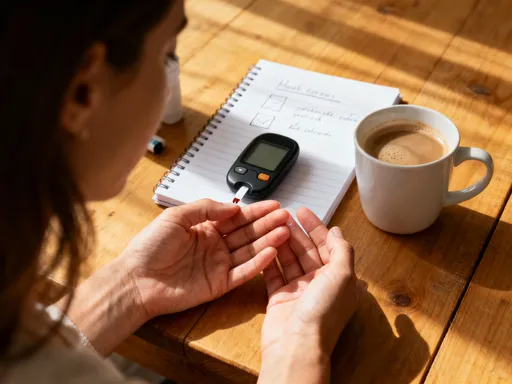
How I Started Tracking My Health and Tamed My Blood Sugar Without Overwhelm
When I first heard about blood sugar swings affecting energy and mood, I didn’t think it applied to me—until I felt the crashes, cravings, and brain fog. For beginners, managing chronic health can feel confusing, but tracking key indicators changed everything. It’s not about perfection; it’s about awareness. This is how simple shifts in daily habits made a real difference—no extreme diets, no magic pills, just science-backed, doable steps worth sharing. What began as a quiet concern about midday fatigue grew into a deeper understanding of how the body truly functions. I learned that health isn’t just about what you eat or how much you weigh—it’s about how your body responds to the choices you make every day. And one of the most powerful tools I discovered was paying attention to my blood sugar, not as a patient, but as someone who wanted to feel better.
The Moment Everything Clicked: Realizing Blood Sugar Was the Missing Link
For years, I chalked up my afternoon exhaustion to a busy schedule. I ate what I believed was a balanced diet—whole grains, fruit, low-fat yogurt—yet I found myself reaching for snacks by 3 p.m., only to feel sluggish an hour later. I’d snap at my family over small things, then feel guilty minutes afterward. My energy wasn’t steady; it was a rollercoaster. I didn’t connect these patterns to anything deeper until a friend mentioned her glucose monitor. She wasn’t diabetic—she was simply curious about how food affected her mood and focus. That conversation planted a seed. I started reading about metabolic health and realized that blood sugar fluctuations could explain my fatigue, irritability, and constant hunger, even without a diagnosis of diabetes.
What surprised me most was learning that blood sugar isn’t just a concern for people with medical conditions. It’s a vital sign for everyone. Every time we eat, especially carbohydrates, our blood glucose rises. Insulin helps move that glucose into cells for energy. But when we eat too many refined carbs or eat at irregular times, the system can become less efficient. Over time, this leads to insulin resistance, a silent precursor to type 2 diabetes, heart disease, and other chronic conditions. I wasn’t overweight, and I exercised occasionally, but my body was sending signals I’d ignored. The emotional shift came when I stopped seeing this as a personal failing and started viewing it as a puzzle worth solving. Instead of fear, I felt curiosity. This wasn’t about fixing something broken—it was about optimizing something that could work better.
Many people overlook blood sugar until symptoms become hard to ignore. They wait for a doctor’s warning or a formal diagnosis before paying attention. But by then, metabolic changes may already be underway. The truth is, our bodies give us clues long before lab results turn abnormal. Mood swings after meals, difficulty concentrating, unexplained weight gain, or persistent hunger are all signs worth noticing. For me, the turning point wasn’t a crisis—it was a quiet realization that I didn’t have to accept constant fatigue as normal. Once I started tracking, I saw patterns I’d never noticed before. Certain foods consistently left me drained. Stress made cravings worse. Sleep quality directly affected my next-day energy. Awareness didn’t fix everything overnight, but it gave me the power to make informed choices.
What Actually Is Blood Sugar—and Why Should You Care? (Plain English, No Jargon)
Blood sugar, or glucose, is the main source of energy for your body’s cells. Think of it as fuel for your engine. When you eat, especially carbohydrates like bread, pasta, or fruit, your digestive system breaks them down into glucose, which enters the bloodstream. In response, your pancreas releases insulin—a hormone that acts like a key, unlocking your cells so glucose can enter and be used for energy. This process keeps your blood sugar in a healthy range. When it works smoothly, you feel steady and alert. But when it’s disrupted, problems arise.
Imbalanced blood sugar doesn’t just affect people with diabetes. Even within the so-called “normal” range, fluctuations can cause real symptoms. High spikes followed by sharp drops lead to energy crashes, increased hunger, and difficulty focusing. Over time, repeated spikes can make your cells less responsive to insulin, a condition known as insulin resistance. This means your body has to produce more insulin to do the same job, which can lead to weight gain, especially around the abdomen, and increase the risk of chronic diseases like type 2 diabetes, heart disease, and fatty liver. The good news? These changes develop slowly, which means there’s time to intervene—often through simple lifestyle adjustments.
One of the most common myths is that only people with diabetes need to monitor their blood sugar. In reality, metabolic health—the body’s ability to process energy efficiently—is important for everyone. Studies show that a significant portion of adults have some degree of insulin resistance, even if they don’t know it. Another myth is that blood sugar is only affected by sugar and sweets. In truth, any carbohydrate-rich food, including white rice, potatoes, and even fruit juices, can cause rapid spikes. Protein and fat, on the other hand, have a much smaller impact and can actually help slow the absorption of glucose, leading to more stable levels. Understanding this helped me rethink my meals not as good or bad, but as tools for balance.
The bigger picture is this: long-term metabolic health depends on how well your body manages glucose over time. Ignoring early warning signs—like post-meal fatigue or sugar cravings—can allow subtle imbalances to become serious conditions. But the reverse is also true: paying attention early can prevent problems before they start. You don’t need a diagnosis to benefit from better habits. Just as brushing your teeth prevents cavities, managing your blood sugar through daily choices can protect your long-term health. It’s not about restriction or fear; it’s about giving your body the support it needs to function at its best.
My First Steps: Low-Effort Ways I Started Monitoring Key Health Indicators
I didn’t start with fancy devices or strict protocols. My first tool was a notebook. I began writing down what I ate, how I felt two hours later, and whether I had energy, hunger, or mood changes. At first, it felt tedious, but within a week, patterns emerged. I noticed that days when I ate oatmeal with fruit, I’d feel hungry and irritable by mid-morning. But when I had eggs with vegetables, my energy stayed steady. These simple observations were more revealing than I expected. I wasn’t measuring exact numbers—I was learning how my body responded to real food in real life.
After a few weeks, I decided to try a glucometer, a small device that measures blood sugar from a finger prick. I was nervous at first, worried I’d see scary numbers. But the results were empowering. I tested my glucose before and after meals and saw exactly how different foods affected me. For example, a breakfast of toast and jam spiked my levels to 160 mg/dL, followed by a crash to 80 mg/dL by 10 a.m. That explained the shakiness and brain fog. In contrast, a meal of scrambled eggs, avocado, and spinach kept my levels between 90 and 110 mg/dL—calm and steady. The glucometer wasn’t about judgment; it was feedback. It helped me make better choices without guesswork.
Besides blood sugar, I tracked three other key indicators: energy, hunger, and mood. I rated each on a simple scale from 1 to 5 throughout the day. Over time, I saw clear connections. Poor sleep predicted higher cravings the next day. Stressful mornings led to afternoon snacking. When I moved my body, even briefly, my mood improved. These weren’t lab tests, but they were valuable data points. I also kept a food journal, not to count calories, but to notice patterns. I didn’t aim for perfection—I aimed for consistency. Some days I forgot to log, and that was okay. The goal wasn’t to be flawless; it was to build awareness. And as I became more consistent, my confidence grew. I wasn’t just guessing anymore—I was learning.
The real benefit wasn’t in the tools themselves, but in the habit of paying attention. Whether using a notebook, a glucometer, or a simple rating system, the act of tracking changed my relationship with my body. I stopped seeing symptoms as random and started seeing them as signals. This shift—from passive to active—was the foundation of everything that followed. You don’t need expensive equipment to start. You just need curiosity and a willingness to observe. The body speaks in subtle ways, and when you listen, it tells you what it needs.
The Breakfast Trap: How One Meal Derailed My Day (And What I Changed)
For years, I believed breakfast should be light and grain-based. I’d have cereal with skim milk, whole wheat toast with jam, or a fruit smoothie—foods I thought were healthy. But by 10 a.m., I’d feel shaky, hungry, and unable to focus. I didn’t realize that these meals were flooding my bloodstream with glucose, triggering a large insulin response, followed by a crash. I was setting myself up for a day of cravings and fatigue without knowing it. The turning point came when I tested my blood sugar after a typical breakfast and saw it jump from 95 mg/dL to 180 mg/dL in under an hour. That was well into the spike zone. No wonder I felt awful.
I decided to experiment. Instead of starting the day with carbs, I focused on protein and healthy fats. My new breakfast became two eggs with spinach and olive oil, half an avocado, and a handful of berries. I also added a small serving of nuts. The first morning, I was skeptical. Wouldn’t I be hungry by 9? But three hours later, I still felt full and alert. When I checked my glucose, it had risen only to 105 mg/dL and stayed stable. The difference was undeniable. I had steady energy, no cravings, and better focus. Over the next few weeks, I tested other combinations—Greek yogurt with chia seeds and walnuts, cottage cheese with cucumber and flaxseed—and found similar results. Meals with balanced macronutrients kept my levels in a healthy range.
The immediate benefits went beyond numbers. I stopped needing a mid-morning snack. My mood was more even. I didn’t feel the urge to reach for sweets by lunchtime. This wasn’t about eliminating carbs altogether—it was about timing and pairing. Eating fruit with nuts, for example, slowed the sugar absorption. Having whole grains with protein and fat made them less likely to cause spikes. Small tweaks, not drastic changes, made the biggest difference. I didn’t have to give up all my favorite foods; I just had to rethink how I combined them. And because the changes felt sustainable, I stuck with them.
What I learned is that breakfast sets the tone for the entire day. A meal that causes a spike leads to a crash, which leads to poor choices later. But a balanced start supports stable energy, better decisions, and long-term metabolic health. You don’t need a gourmet kitchen or hours to prepare. A boiled egg, a spoon of nut butter, or a slice of cheese with vegetables can be enough. The goal isn’t perfection—it’s progress. And when you see how one small change can improve your entire day, it becomes easier to keep going.
Movement That Fits: Not the Gym, But the Lifestyle Shift That Worked
I used to believe that exercise had to be intense to matter. I’d sign up for fitness classes, push through high-intensity workouts, and then burn out within weeks. The problem wasn’t the effort—it was the stress. Intense exercise, especially when combined with poor sleep or high cortisol, can actually raise blood sugar. The body sees extreme exertion as a threat and releases glucose to fuel the “fight or flight” response. For someone already struggling with insulin sensitivity, this can backfire. I noticed that on days I did long, hard workouts, my glucose readings were higher, not lower. I was working against my own biology.
The real breakthrough came when I shifted my focus from performance to consistency. I started taking a 10-minute walk after each meal. It wasn’t strenuous—just a slow stroll around the block or through the house. But the effect was remarkable. Studies show that light activity after eating helps muscles absorb glucose without needing as much insulin. Within days, I saw lower post-meal readings. My average two-hour glucose dropped from 140 mg/dL to 115 mg/dL. I didn’t need a gym or special equipment—just the willingness to move.
Beyond walking, I incorporated small changes throughout the day. I stood while talking on the phone. I did gentle stretching in the morning. I took the stairs instead of the elevator. These weren’t workouts in the traditional sense, but they added up. I also started doing short standing breaks every hour if I was sitting for long periods. This helped improve circulation and prevent the metabolic slowdown that comes with prolonged inactivity. The key was making movement a natural part of my routine, not a chore. I didn’t have to carve out an hour—I just had to weave activity into my day.
The best part was that this approach was sustainable. I didn’t dread it. I didn’t feel guilty when I missed a day. Because it was low-pressure, I stuck with it. And over time, these small efforts led to real results. My energy improved. My sleep got better. My glucose levels became more stable. I realized that movement isn’t just about burning calories—it’s about signaling to your body that it’s active and healthy. Even gentle activity tells your cells to stay responsive to insulin. You don’t need to run a marathon. You just need to keep moving, in ways that fit your life.
Sleep, Stress, and Sugar: The Hidden Trio No One Talks About
I used to underestimate the role of sleep and stress in my health. I thought as long as I ate well and moved a little, I was doing enough. But I couldn’t understand why some days, even with a good breakfast, my cravings were intense. Then I noticed a pattern: on nights when I slept poorly, my glucose was harder to control. Research confirms this—lack of sleep increases cortisol, the stress hormone, which signals the liver to release more glucose. It also reduces insulin sensitivity, meaning your body needs more insulin to clear the same amount of sugar. Poor sleep literally makes your body resist its own efforts to balance blood sugar.
Stress had a similar effect. When I was anxious or overwhelmed, I craved carbs. This wasn’t weakness—it was biology. Stress triggers the release of cortisol and adrenaline, which raise blood glucose to prepare for action. In modern life, we rarely use that energy in physical ways, so the sugar stays in the bloodstream. Over time, this contributes to insulin resistance. I started paying attention to my stress levels and found that simple practices made a difference. Five minutes of deep breathing in the morning helped me start the day calmly. A consistent bedtime routine—dimming the lights, reading, avoiding screens—improved my sleep quality. I also set boundaries with work and social media, which reduced mental clutter.
The domino effect became clear: better sleep led to lower stress, which led to fewer cravings, which led to better food choices, which led to more stable glucose. It wasn’t about fixing one thing at a time—it was about creating a supportive environment for my body. I stopped viewing emotional health as separate from physical health. They were deeply connected. When I felt calm and rested, I made better decisions. When I was tired or stressed, I reached for quick energy—usually sugar. By addressing sleep and stress, I wasn’t just improving my mood; I was supporting my metabolism.
This trio—sleep, stress, and sugar—works together. Ignoring one undermines the others. But nurturing all three creates a foundation for lasting health. You don’t need a perfect routine. Small, consistent improvements add up. Going to bed 20 minutes earlier, taking three deep breaths before eating, or stepping outside for fresh air can shift the balance. The body thrives on rhythm and calm. When you give it those things, it responds with better energy, clearer focus, and more stable blood sugar.
Putting It All Together: My Real-Life Routine Now (No Fluff, Just What Works)
Today, my routine isn’t rigid, but it’s intentional. I start with a balanced breakfast—usually protein, healthy fat, and fiber. I avoid eating on the go. I take a 10-minute walk after meals, even if it’s just around the house. I move throughout the day, standing, stretching, or walking when I can. I prioritize sleep, aiming for 7–8 hours, and have a wind-down routine that helps me relax. I manage stress with breathwork, routine, and digital boundaries. I still track my energy, hunger, and mood, and occasionally check my blood sugar to stay informed.
Slip-ups happen. Sometimes I eat something that spikes my glucose. Sometimes I skip a walk or stay up too late. But I’ve learned not to respond with guilt. Progress isn’t linear. What matters is returning to balance, not perfection. I’ve also found support in online communities where people share real experiences. And when I had questions, I consulted a doctor, not to get a diagnosis, but to understand my lab results and get personalized advice. Professional guidance complements self-tracking—it doesn’t replace it.
What I wish I’d known sooner is that you don’t have to wait for a problem to start caring. Health isn’t just the absence of disease—it’s the presence of energy, clarity, and resilience. Tracking my health didn’t turn me into a data-obsessed robot. It made me more in tune with my body. I learned to listen—to notice when I was truly hungry, when I needed rest, when a walk would help. These small signs add up to big changes. And the best part? It’s never too early to start. Your health is talking. Are you listening?
Final Thoughts: Small Signs, Big Changes—Your Health Is Talking, Are You Listening?
Awareness is the first and most powerful step toward better health. You don’t need a diagnosis, a crisis, or a dramatic intervention to begin. The body communicates constantly—through energy levels, mood, hunger, and focus. These signals are not random; they are information. When you start paying attention, you gain the power to respond. Tracking blood sugar and related habits isn’t about fear or restriction. It’s about understanding, empowerment, and choice. It’s about giving yourself the tools to feel your best, every day.
For anyone feeling overwhelmed, remember: small steps lead to real change. You don’t have to do everything at once. Start with one meal, one walk, one night of better sleep. Notice what happens. Build from there. And always remember that self-tracking is a companion to professional care, not a substitute. If you have concerns, talk to a healthcare provider. But don’t wait for permission to listen to your body. Your health journey is personal, but you’re not alone. Millions are learning to tune in, make better choices, and reclaim their energy. You can too. The signs are there. The time to listen is now.